Trainable Articulation for Narrators: Scientific Ways to Improve Diction with Tongue Training, Dental Approaches, and a 5-Minute Morning Routine
Narration from ¥50,000, delivered in as little as 24 hours.
* If you have a fixed budget, let me know and we can work from there.
Diction Is Not Talent—It’s a Skill You Can Measure and Improve
In professional narration, “good diction” is not just a natural gift. It is usually the result of well-coordinated tongue, lips, jaw mobility, stable airflow, oral space, dental structure, and repeatable articulation. In other words, diction can be improved scientifically—not just by intuition.
When I direct voice talent, I evaluate diction with four criteria:
1. Clarity of consonant onset
2. Stability of vowel shape
3. Consistency during connected speech
4. Repeatability even under fatigue
For narrators, the key is not being good at tongue twisters. It is being able to read long passages without losing clarity. That is where tongue-strength training and, when needed, dental approaches become truly useful.
What Tongue Training Actually Improves
Two effective tools are tongue trills and tongue circles.
A tongue trill is the rolled “r”-like vibration that trains tongue-tip release and responsiveness to airflow. Tongue circles are done with the mouth closed, tracing the outer dental arch with the tongue tip, improving overall tongue mobility and endurance.
These exercises mainly help with three things:
- Better separation of R/T/S-like consonants
- Faster recovery when the tongue starts to stumble mid-sentence
- Clearer articulation in the morning, when the mouth is still stiff
But more repetitions do not automatically mean better results. What matters is load, duration, and measurement.
How to Measure the Effect
The simplest method is to use smartphone recordings and waveform comparison.
Record the same sentence for 15 seconds under the same conditions every time. For example:
> “Precise consonant control and subtle breath detail create narration that sounds credible and refined.”
Track these three points:
- Number of retakes: can you say it cleanly in one take?
- Consonant blur: do T, S, and R-like sounds weaken?
- Timing variation: does the sentence length vary too much?
If possible, use Audacity or a spectrum display app to check consonant attacks and fricative clarity. For better comparison, keep recording peaks around -12 dB.
A Practical Two-Week Plan
- Tongue trill: 10 seconds × 5 reps, 10-second rests
- Tongue circles: 20 clockwise + 20 counterclockwise × 2 sets
- Tongue-tip forward hold: 5 seconds × 5 reps
- “Ta-ta-ta / Ra-ra-ra / Sa-sa-sa”: 15 reps each at a steady tempo
Do this twice a day for 14 days.
Useful signs of progress include:
- A 30% reduction in articulation errors during connected reading
- Better stability in the first three takes of a morning session
Those are practical, job-relevant improvements.
Dental Approaches: Fix the Physical Foundation
One often-overlooked factor in diction is the physical condition inside the mouth. Some articulation problems are not due to lack of practice, but to structural constraints.
Mouthpieces and Night Guards
Here, I mean night guards or appliances for clenching and grinding. If you clench strongly during sleep, your jaw muscles and tongue base may be stiff in the morning, which can dull consonant precision. That often appears as heavy R sounds, cloudy S sounds, or weak phrase endings.
The point is not to speak while wearing a mouthpiece. The point is to reduce overnight tension and restore normal jaw movement by morning. If your diction is dramatically worse only in the morning, your jaw feels tired, or you see bite marks inside your cheeks, a dental consultation is worth considering.
Checking the Lingual Frenulum
Another important factor is the lingual frenulum—the tissue under the tongue. If it is too short or too tight, it may restrict tongue-tip elevation or forward movement, affecting R, T, and N-like sounds.
Basic self-checks include:
- Can you comfortably place the tongue tip behind the upper front teeth with the mouth open?
- Does the tongue tip form an exaggerated heart shape when extended?
- Is a tongue trill physically almost impossible?
Still, do not self-diagnose. If you suspect a restriction, consult a professional familiar with voice and oral function: an ENT specialist, oral surgeon, orthodontist, or speech-language pathologist. The first step is functional evaluation, not automatically surgery.
A 5-Minute Morning Warm-Up Used by Professionals
The most important part of a 5-minute routine is not the length—it is the sequence.
0:00–1:00 Release
- Roll the shoulders 3 times
- Move the jaw gently left and right 5 times each
- Do a light lip roll for 20 seconds
1:00–2:00 Airflow Stability
- Inhale for 4 seconds, exhale on “sss” for 8 seconds × 3
- Focus on keeping the airflow thin and even, not loud
2:00–3:00 Tongue Mobility
- Tongue circles: 10 each direction
- Touch the tongue tip to: behind upper front teeth, left corner, right corner, behind lower front teeth—5 rounds
3:00–4:00 Consonant Activation
- “Ta-Ta-Ta,” “Ra-Ra-Ra,” “Sa-Sa-Sa”
with a metronome at 80 BPM, one sound per beat
- Then alternate “Ta-Ra” and “Sa-Ra” for 10 reps
4:00–5:00 Transfer to Real Copy
- Read the first 3 lines of your script
1st time slowly
2nd time at performance tempo
3rd time with emotional intention
This final transfer step is crucial. If you stop at drills, your tongue may move better, but your diction may not improve inside actual narration. Always connect the exercise to real copy.
The Metrics That Actually Matter
Finally, diction improvement should not be judged by “it feels better.” I recommend these three indicators:
- Number of articulation errors in first-read copy
- Clarity retention after 3 minutes of reading
- Difference in repeatability between morning and night
When these improve, the results show up clearly in professional work: fewer retakes, faster adaptation to direction, and stronger credibility in performance.
Diction is a subtle skill—but it directly affects trust.
Less guesswork, more design.
Less willpower mythology, more measurement.
And not just training the outside of the mouth—but also understanding the conditions inside it.
That is how professionals improve articulation.
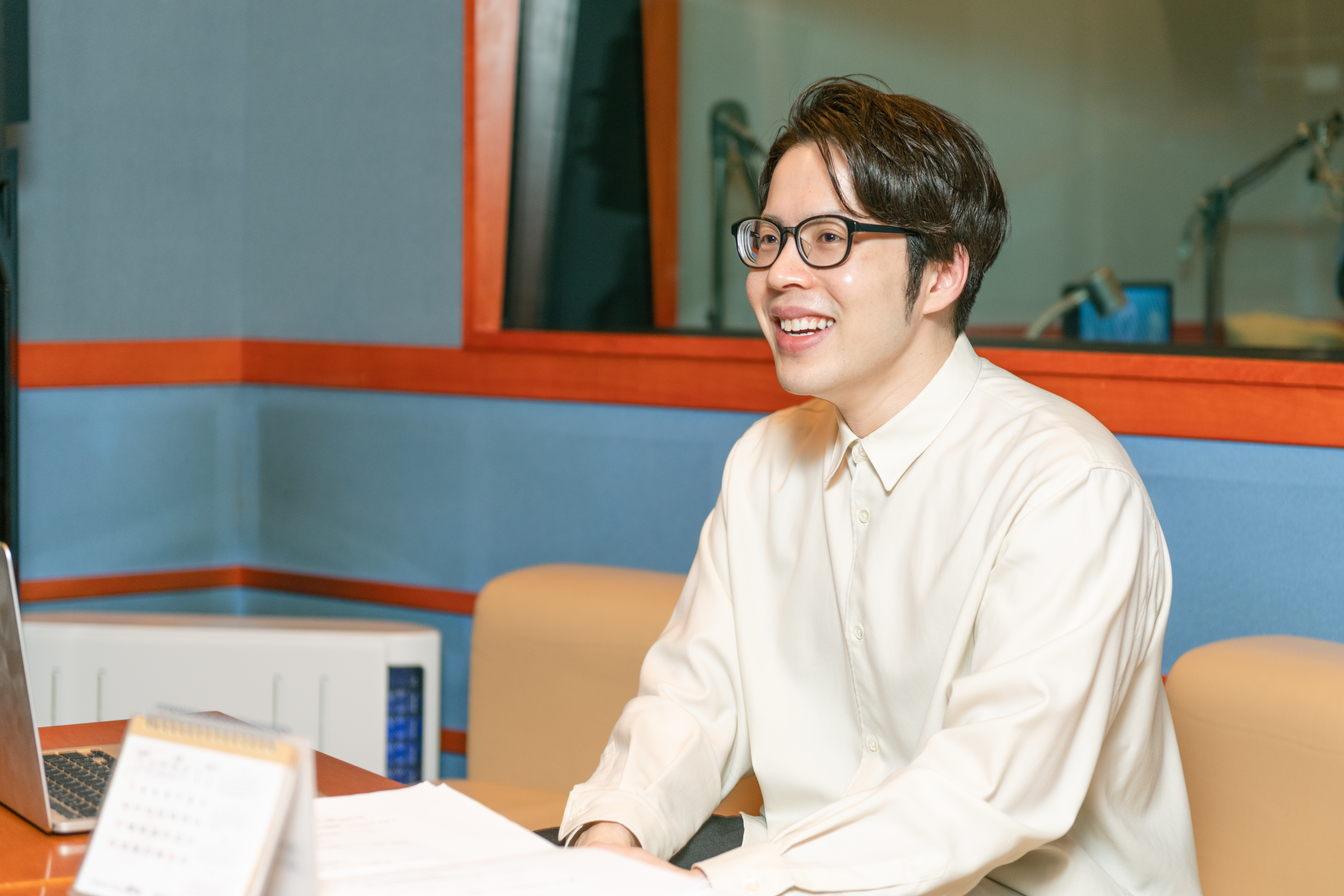
Masahiro Kobayashi
Professional Narrator
A Japanese male narrator handling over 200 projects a year across corporate videos, commercials and documentaries. Recorded in a broadcast-quality home studio and delivered fast.
Listen to voice samplesRelated Articles
Narration Demand and Audio Specs for Game Streaming & Esports: How to Design a Voice That Delivers Real-Time Energy
A practical guide to narration for game streaming and esports: vocal techniques for real-time excitement, audience unity, and platform-specific audio specifications.
How Narrators Slow Vocal Aging: Voice Muscle Training, Posture, Breathing, and Career Strategy in Your 40s and 50s
Practical methods professional narrators in their 40s and 50s use to slow vocal aging: voice muscle training, posture correction, breathing, session management, and career strategies that turn changing vocal tone into an advantage.
How Luxury Brands Should Choose a Voice: Casting for Silence, Dignity, and Distinction
A practical guide to narrator casting for fashion and luxury brands, explaining how to express silence and dignity through voice, and how voice design differs between ready-to-wear and haute couture.
CONTACT
Narration Enquiries & Quotes
Corporate VP, commercials, e-learning, product manuals — you do not need everything decided. Send the script length, intended media and target date, and I will come back with a proposal.
- From
- ¥50,000〜
- Turnaround
- 24 hours
- Format
- WAV / MP3
* If you have a fixed budget, let me know and we can work from there.
Or email directly: info@kobatee.jp