Designing Narration for Audio Guides: Pacing at the Exhibit, Timing for GPS Triggers, and Workflow with Curators
Narration from ¥50,000, delivered in as little as 24 hours.
* If you have a fixed budget, let me know and we can work from there.
Audio Guide Narration Is Not Just Reading—It Is Designing the On-Site Experience
Narration for museums, galleries, and tourist sites follows a very different logic from corporate videos or commercials. The key difference is that listeners are not sitting still. They are looking, walking, comparing, and thinking while listening. That means the narrator’s voice must do more than deliver information: it must shape eye movement, stopping behavior, and even the perceived distance between the visitor and the object.
When I work on audio guides, I do not begin with “How many characters per track?” I begin with “How many seconds can a visitor naturally stay in front of this exhibit?” As a rule of thumb, a person can focus on a single artwork for 60 to 120 seconds, but in crowded conditions that may shrink to around 45 seconds. So I usually keep one script between 300 and 450 Japanese characters, with a speaking rate equivalent to about 260 to 320 characters per minute. Even for highly academic content, a structure works best when the first 15 seconds tell the listener what to look at, the next 30 seconds provide context, and the final 15 to 30 seconds leave room for interpretation.
Pacing the Voice for Listening in Front of an Exhibit
In front of an exhibit, the most important factor is not the amount of information but cognitive synchronization. If the script says, “Please look at the figure in the upper right,” there should be a pause of about 0.6 to 1.2 seconds immediately after that cue. Without the pause, the listener understands the instruction but has no time to move their eyes. If the pause is too long, however, it may sound like a playback problem. Silence must be designed very carefully.
In practice, I recommend adding pause symbols directly into the script:
- `/` for a short break, about 0.2 to 0.4 seconds
- `—` for eye movement, about 0.6 to 1.0 seconds
- `...` for emotional resonance, about 1.0 to 1.5 seconds
For example: “Please look at the bird painted on the central vase—this small motif tells us about trade at the time.” In audio guides, visibility improves when you place a pause right after a key noun. This is especially effective for proper names, dates, directions, and colors. Say the term clearly, then leave one beat. This is not about sounding elegant in the studio. It is about preventing confusion on site.
Recording level also matters. Depending on the delivery platform, a practical target for outdoor-capable guides is around -16 LUFS, with peaks kept within -1.0 dBTP. For quiet indoor museum devices, it is often better not to over-compress; leaving some dynamic range sounds more refined.
In GPS-Triggered Guides, Quality Depends More on Waiting Than on Starting
GPS-triggered guides are unpredictable because location accuracy varies and people walk at different speeds. That is why the opening sentence must still work even if the first moment is partially missed. If you overload the first 3 to 5 seconds with critical information, playback delay can leave the listener behind. A safer opening is something tied directly to the scene, such as “The stone wall you can see ahead...” and then place the core information after the six-second mark.
For testing, an outdoor GPS trigger radius of about 15 to 30 meters is a reasonable starting point, and it is wise to test with two walking speeds: 3 km/h and 5 km/h. At intersections or branching points, guidance audio should stay under 20 seconds. Longer explanations should be moved to places where visitors can safely stop. While walking, the narration should focus on only three things: direction of movement, safety confirmation, and the next visible landmark.
Pause design is also different from exhibit commentary. During walking, more than 1.5 seconds of total silence can make users think playback has stopped. In those cases, it helps to use a subtle environmental bed or shorten the gap before the next sentence. If the implementation team standardizes fade lengths to around 200 to 400 milliseconds, transitions between triggered clips feel much smoother.
Working with Curators: Divide Accuracy and Listenability
The hardest part of audio guide production is balancing academic accuracy with spoken clarity. My standard workflow has four stages:
1. Curator Draft
Receive a text focused on facts, terminology, and exhibition intent.
2. Narration Design Draft
Rebuild the script into spoken language, usually aiming for 40 to 60 characters per sentence in Japanese, and add visual cues where needed.
3. Read-Through Review
Create a rough voice track and review it with the curator, producer, and implementation team together. Confirm pronunciation, emphasis, and duration at the same time.
4. On-Site Listening Test
Do the final check in the actual exhibition space, not only in the studio. Verify reverberation, foot noise, crowd conditions, and whether eye guidance really works.
A highly effective method is to manage revisions in Google Docs or Notion with color-coded categories such as “fact correction,” “expression correction,” and “reading correction.” The curator owns factual accuracy, the narrator or director owns listenability, and the implementation team owns playback conditions. The clearer the boundaries, the faster the revision process.
A well-made audio guide becomes more than an explanation—it becomes a companion to discovery. If the voice pushes too far forward, the object itself becomes distant. If the voice pulls back too much, understanding is lost. That is why audio guide narration requires more than reading well. It requires the ability to imagine what is happening in that exact place and design for it. The essence of audio guide narration lies in sculpting those few seconds when a person stops in front of an exhibit.
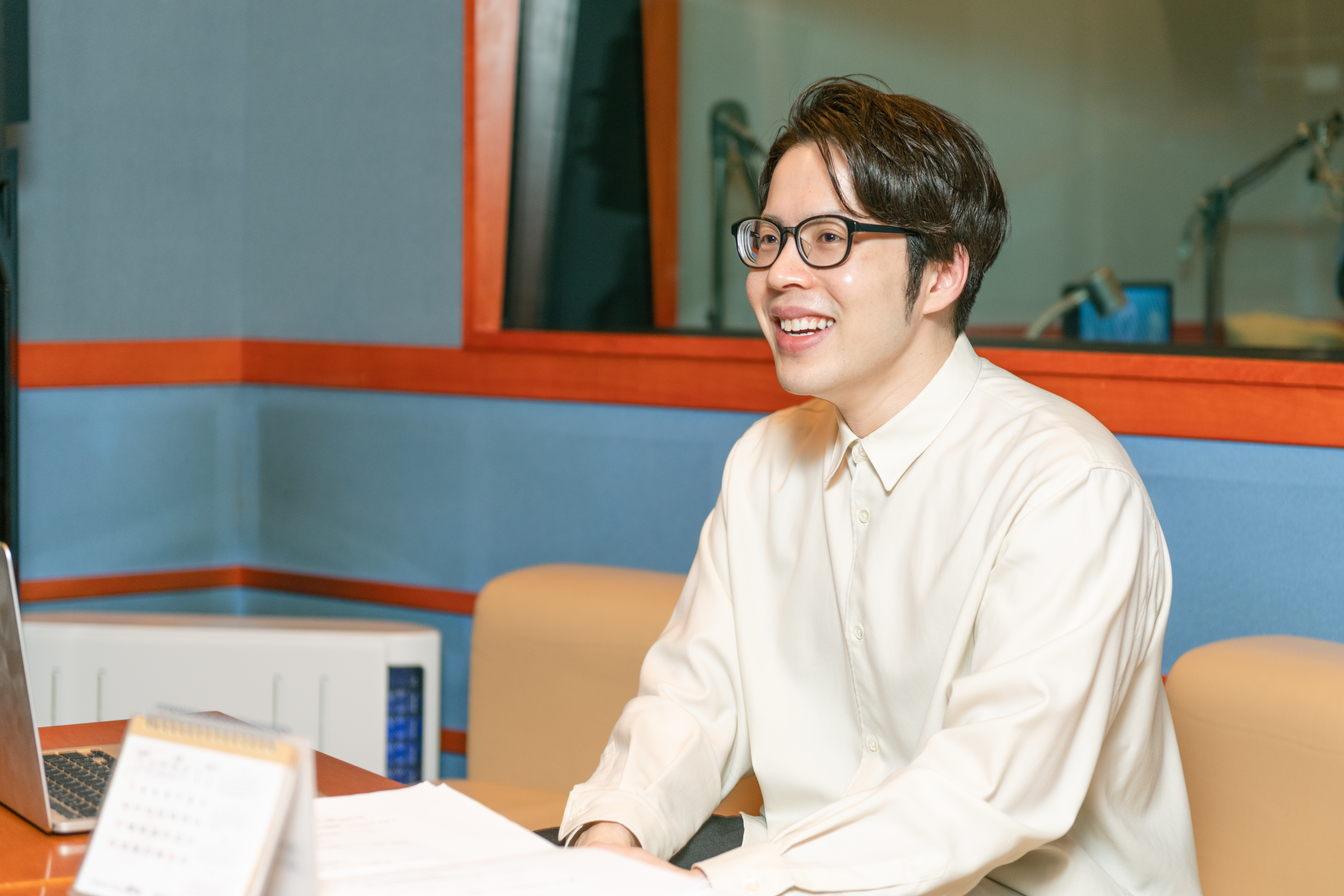
Masahiro Kobayashi
Professional Narrator
A Japanese male narrator handling over 200 projects a year across corporate videos, commercials and documentaries. Recorded in a broadcast-quality home studio and delivered fast.
Listen to voice samplesRelated Articles
Multilingual Narration for Expos and International Exhibitions: Coexisting with Simultaneous Interpretation, Unifying Pavilion Tone, and Managing Recording Schedules
A practical guide to multilingual narration for expos and international exhibitions, covering coexistence with simultaneous interpretation, pavilion tone design, and recording schedule management.
Narration Design for Short-Form Social Video: How to Win the First Second in 15, 30, and 60 Seconds
A practical guide to narration for TikTok, Instagram Reels, and YouTube Shorts, covering first-second vocal hooks and vertical-format audio design by 15, 30, and 60-second durations.
Complete Guide to Subtitle-Centered Narration Design: Speech Rate, Clarity, and Recording Direction for AI Captions
A practical guide to improving subtitle accuracy in narrated videos, covering speech rate, articulation, script design, and recording direction optimized for AI captioning and SRT/VTT workflows.
CONTACT
Narration Enquiries & Quotes
Corporate VP, commercials, e-learning, product manuals — you do not need everything decided. Send the script length, intended media and target date, and I will come back with a proposal.
- From
- ¥50,000〜
- Turnaround
- 24 hours
- Format
- WAV / MP3
* If you have a fixed budget, let me know and we can work from there.
Or email directly: info@kobatee.jp