Narration Standards for Udemy and Coursera: Practical Pacing, Pauses, and Subtitle-Synced Recording
Narration from ¥50,000, delivered in as little as 24 hours.
* If you have a fixed budget, let me know and we can work from there.
In educational narration, the standard is not “reading well” but “never interrupting learning”
Narration for platforms like Udemy and Coursera is judged differently from commercials or corporate videos. What matters is not a striking voice, but audio that allows learners to stay focused for 10 or 20 minutes while steadily building understanding. In other words, the real standard is not performance quality alone, but whether the narration avoids adding cognitive load.
When I direct this kind of recording, I first check three things: pacing, pauses, and subtitle alignment. For educational content, the most stable delivery is slightly slower than natural conversation. A practical target is 280–360 Japanese characters per minute, or 130–160 words per minute in English. In sections dense with terminology, it is often better to slow down further. If the narration is too fast, comprehension falls behind; if it is too slow, attention drifts. The key is not to keep one fixed speed throughout, but to adjust pacing depending on whether you are explaining, defining, demonstrating steps, or summarizing key points.
Designing pace and pauses to sustain concentration
In educational video, pauses are not mainly for emotion. They are for cognitive processing. In practice, I divide pauses into three types.
First, comma pauses: about 0.2 to 0.4 seconds.
Second, sentence-end comprehension pauses: about 0.5 to 0.8 seconds.
Third, retention pauses around slide changes or major concepts: about 0.8 to 1.2 seconds.
Using these three pause types gives learners time to create a mental note. This is especially effective in bullet points or step-by-step instruction: a 0.3-second pause before each item and about 0.7 seconds after an important point can improve subtitle readability as well. If everything is read in the same rhythm, the content becomes flat, and learners often feel that they are listening without truly absorbing anything.
One caution: do not make pauses too long. In online learning, extended silence can be mistaken for playback failure or connection trouble. In practical terms, it is safer not to repeat fully silent gaps longer than 1.5 seconds. If a longer break is needed, leaving a trace of breath or a sense of the next sentence entering often feels more natural than complete silence.
Recording with subtitles in mind has a major impact on learning efficiency
In educational video, subtitles are not just an accessibility add-on. They are part of the learning pathway. For non-native learners, people watching in noisy environments, and users reviewing content at faster playback speeds, subtitle quality strongly affects completion rates. That is why narration should be recorded with subtitle integration in mind from the very beginning.
The basic rule is to keep sentences short. Long sentences often create awkward automatic subtitle segmentation, causing timing mismatches between reading and listening. A useful guideline is 40–60 Japanese characters per sentence, or about 12–20 words in English. Structuring content as “conclusion → reason → example” is far easier to subtitle than relying on long, connector-heavy sentences.
A highly effective recording technique is to make the beginning of every sentence clear and well-defined. When the waveform has a distinct onset, tools like Premiere Pro, DaVinci Resolve, Descript, and Camtasia can align subtitle timing more easily. By contrast, faded endings or breathy, vague sentence starts reduce speech recognition accuracy. In subtitle-driven production, a “recognizable voice” is often more valuable than a merely “beautiful voice.”
Practical standards for sound quality, microphones, and editing
For educational content, the ideal sound is not heavily produced. It is a sound that remains comfortable over long listening sessions. As a practical benchmark, aim for a noise floor below -60 dB. Peaks around -6 dB and final loudness around -19 to -16 LUFS usually translate well across both desktop and mobile playback.
The microphone does not need to be extremely expensive, but the basics matter: place it 15–20 cm from the mouth, slightly off-axis, and use a pop filter. Since educational narration does not benefit from excessive low-end proximity effect, a gentle high-pass filter around 80 Hz can reduce listening fatigue. For compression, a ratio of 2:1 to 3:1 with about 2–4 dB of gain reduction is usually safe. Over-compression creates a dense, broadcast-like pressure that often feels too heavy for learning content.
In editing, do not remove every breath. If you erase all breathing, the result can feel mechanical and strangely distracting. A good guideline is to reduce only overly loud breaths by 3–6 dB while keeping the breaths that support phrasing and comprehension. In educational narration, naturalness is more valuable than perfection.
The fastest workflow is: script design → test read → subtitle check → final recording
The most efficient workflow is simple. Start by marking the script with places to slow down, places to pause, and likely subtitle break points. Even a basic notation system such as “/” for a short pause, “//” for sentence-end pause, and “[slide]” for screen changes can significantly improve recording precision. Then record a 1–2 minute test sample and check whether it remains clear at 1.25x playback and whether subtitles fit within two lines.
Educational video is a genre where post-recording correction is expensive. More important than polishing each single clip is maintaining a consistent listening experience across the entire course. That is why a narrator should not be seen as someone who simply reads text, but as part of the instructional design itself. Learner concentration is protected not by talent alone, but by design. In recording for Udemy or Coursera, the most important goal is not just delivering sound, but making sure understanding never stops.
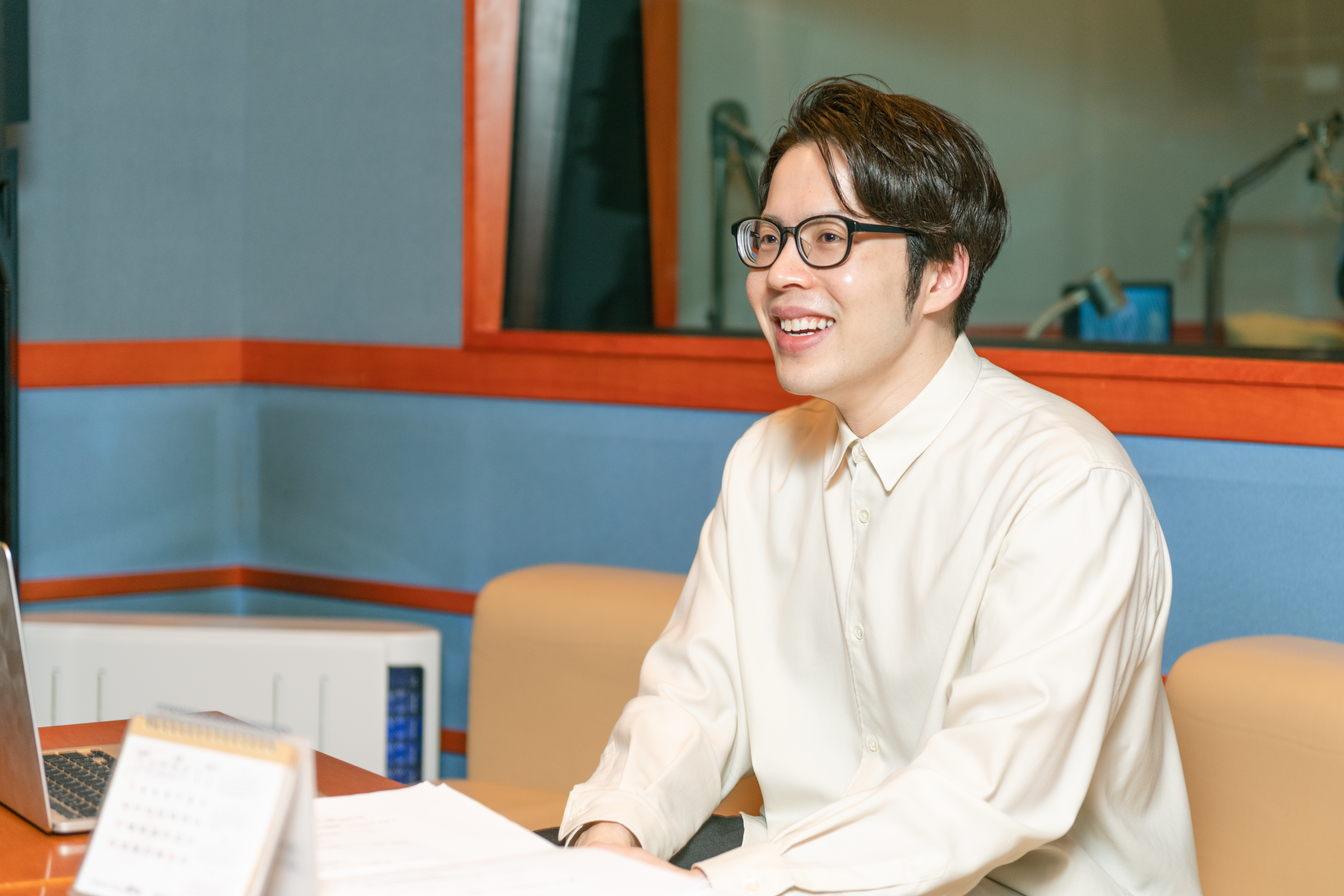
Masahiro Kobayashi
Professional Narrator
A Japanese male narrator handling over 200 projects a year across corporate videos, commercials and documentaries. Recorded in a broadcast-quality home studio and delivered fast.
Listen to voice samplesRelated Articles
Designing Narration for Audio Guides: Pacing at the Exhibit, Timing for GPS Triggers, and Workflow with Curators
A practical guide to narration design for museum, gallery, and tourism audio guides: pacing at exhibits, pause design for GPS-triggered playback, and efficient workflows with curators.
Multilingual Narration for Expos and International Exhibitions: Coexisting with Simultaneous Interpretation, Unifying Pavilion Tone, and Managing Recording Schedules
A practical guide to multilingual narration for expos and international exhibitions, covering coexistence with simultaneous interpretation, pavilion tone design, and recording schedule management.
Narration Design for Short-Form Social Video: How to Win the First Second in 15, 30, and 60 Seconds
A practical guide to narration for TikTok, Instagram Reels, and YouTube Shorts, covering first-second vocal hooks and vertical-format audio design by 15, 30, and 60-second durations.
CONTACT
Narration Enquiries & Quotes
Corporate VP, commercials, e-learning, product manuals — you do not need everything decided. Send the script length, intended media and target date, and I will come back with a proposal.
- From
- ¥50,000〜
- Turnaround
- 24 hours
- Format
- WAV / MP3
* If you have a fixed budget, let me know and we can work from there.
Or email directly: info@kobatee.jp