How Voice Creates Appetite: Sizzle-Driven Food Narration Techniques That Trigger the Senses
Narration from ¥50,000, delivered in as little as 24 hours.
* If you have a fixed budget, let me know and we can work from there.
“Sizzle” in food narration can be created with voice alone
In food and beverage narration, the challenge is not simply delivering information. The real task is to move the listener into a state where they already want to eat something they have not even tasted yet. That is where vocal “sizzle” matters: not as a byproduct of visuals, but as a deliberate design in the voice itself.
When people hear the word sizzle, they often think of steam, grill sounds, dripping juices, glossy surfaces, or a close-up of a perfect cross-section. But in actual production, even strong visuals can feel flat if the narration has no appetite. On the other hand, when the voice has the right humidity, pace, breath mix, and consonant attack, even a single still image can trigger hunger. Food narration is not explanation. It is a trailer for taste.
In practice, I classify food into three groups.
First, foods sold by heat: fresh bread, teppan dishes, fried items.
Second, foods sold by texture: melting cheese, chewy noodles, crispy snacks.
Third, foods sold by aftertaste: dashi, coffee, wine, chocolate.
The same word “delicious” must be voiced differently depending on which category the product belongs to.
Appetite-triggering voice work is shaped less by volume than by oral resonance
A common misunderstanding in food narration is the idea that “energetic” automatically means “appetizing.” In reality, too much volume often destroys nuance. What matters more than vocal pressure is the design of resonance and breath within the mouth.
For richness and depth, avoid pushing the sound too far forward. Open the back of the mouth vertically and give the vowels a thicker core. In Japanese vowel terms, “o” and “u” should feel deeper, while “a” should stay rounded rather than overly open. In post, a gentle reduction around 2.5kHz while preserving natural body around 180–240Hz often works well. Microphones such as the LCT 440 PURE or TLM 103 are perfectly usable for this style, but the distance should be around 12–18cm, slightly off-axis through a pop filter, so the breath retains a subtle moist texture.
For crispness or sparkling freshness, emphasize the edge of consonants slightly. The onset of sounds like “s,” “sh,” “p,” and “k” should be clear for just a fraction of a second—around 0.1 seconds in perception. But if they become too sharp, the sound shifts from food to detergent-commercial territory. Brightness is useful; hardness is not.
A five-sense food narration framework: temperature → texture → aroma → aftertaste
In food copy, sequence matters enormously. I recommend the order: temperature → texture → aroma → aftertaste. This structure helps the listener reconstruct the eating experience in the brain.
For example:
“Fresh from the oven, steam rising from the croissant.”
“One bite—crisp on the outside, soft and airy within.”
“Buttery aroma opens up in the mouth,”
“and a gentle sweetness lingers at the end.”
This order allows the listener to mentally simulate picking it up, biting into it, smelling it, and swallowing it.
The key is not to read every element with the same energy. Temperature should lean slightly forward. Texture should end with tighter phrase endings. Aroma benefits from 10–20% more breath. Aftertaste needs a longer pause—roughly 0.3 to 0.5 seconds. Even a simple script becomes dimensional when these shifts are controlled.
In real-world direction, texture words matter more than product names
In food-related work, teams often spend time refining the pronunciation of product names and campaign titles. But what often affects sales more directly is how texture words are performed.
Words like:
“juwa” / juicy burst
“toro” / melting softness
“kari” / crisp bite
“fuwa” / fluffy lift
These are not just onomatopoeia. They are purchase triggers.
The trick is not to “act” them as dialogue, but to let them occur as phenomena. “Juwa” should not hit too hard at the start; its center of gravity belongs in the middle. “Kari” should not be elongated; the release after the plosive must be clean and brief. “Toro” should prioritize smoothness in the back of the throat over movement at the tip of the tongue. During recording, it helps to capture at least three versions of each texture cue at 90%, 100%, and 110% speed so the editor can match the picture more precisely.
Pause length also changes by food category. Ramen or fried chicken works best with short pauses—around 0.1 to 0.2 seconds—to preserve momentum. Chocolate or dashi-based products often benefit from around 0.4 seconds of space, allowing aroma and finish to bloom in the imagination. If this is wrong, the script may still be accurate, but the type of deliciousness will feel off.
Great food narration is not “sounding tasty” but making the body react
Ultimately, the goal is not to “sound delicious.” The goal is to create a voice that activates sensory memory in the listener’s mouth and body. People do not literally taste sound, but they do recall temperature, moisture, hardness, lightness, density, and finish with surprising precision through voice cues.
That is why, before reading the script, it helps to break the product down not by flavor but by physical properties:
Is it hot or cold?
Light or heavy?
Dry or moist?
Does it crack or stretch?
Does it vanish quickly or linger?
These five axes clarify the entire performance direction.
What food narration requires is not a contest of beautiful voices. It requires a voice that raises temperature, breath that carries aroma, consonants that carve texture, and pauses that leave an aftertaste. Sizzle does not belong only to visuals. It can be built through vocal design. That is exactly why food narration is so deep—and so worth mastering. Appetite can be moved by technique.
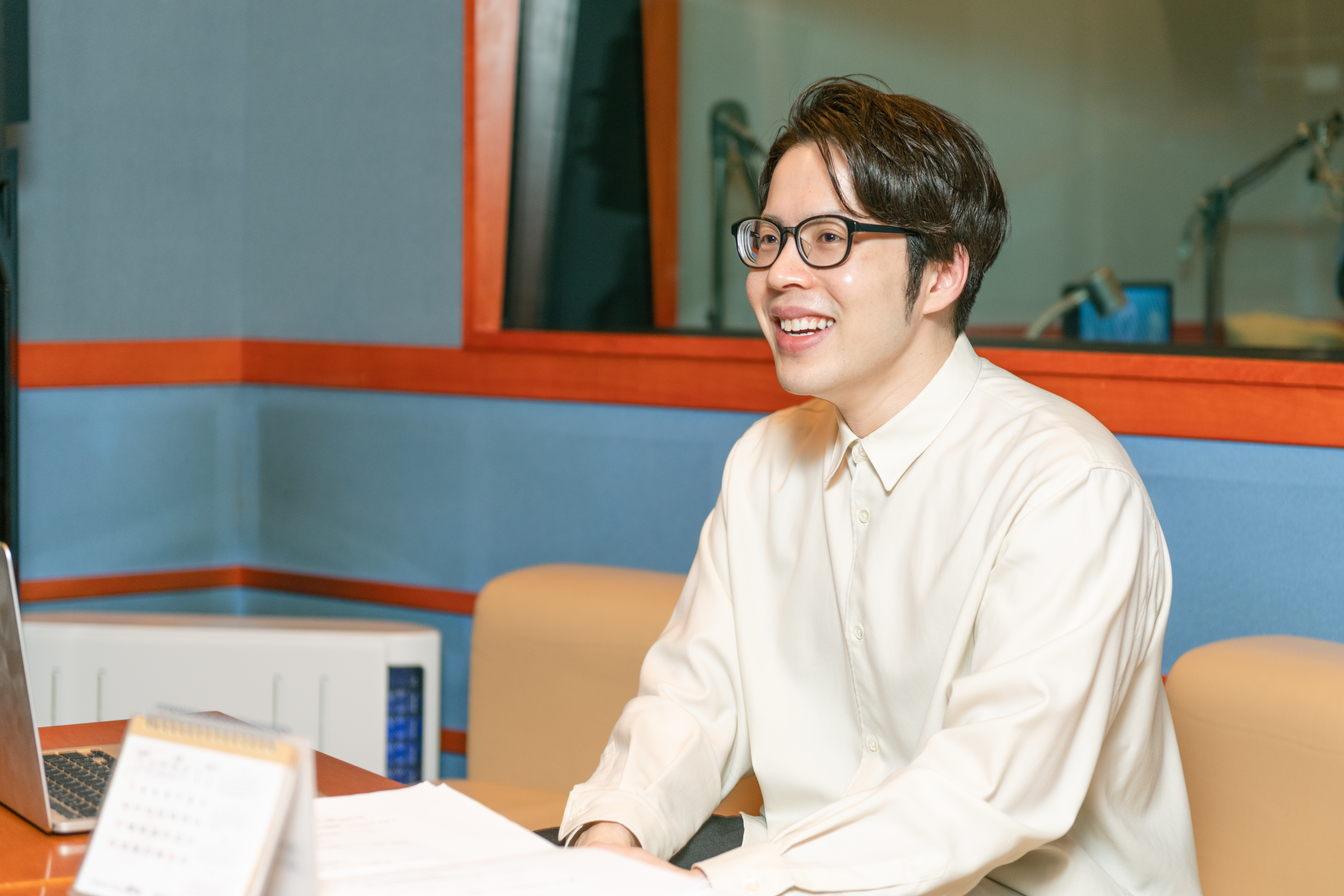
Masahiro Kobayashi
Professional Narrator
A Japanese male narrator handling over 200 projects a year across corporate videos, commercials and documentaries. Recorded in a broadcast-quality home studio and delivered fast.
Listen to voice samplesRelated Articles
Designing Narration for Audio Guides: Pacing at the Exhibit, Timing for GPS Triggers, and Workflow with Curators
A practical guide to narration design for museum, gallery, and tourism audio guides: pacing at exhibits, pause design for GPS-triggered playback, and efficient workflows with curators.
Multilingual Narration for Expos and International Exhibitions: Coexisting with Simultaneous Interpretation, Unifying Pavilion Tone, and Managing Recording Schedules
A practical guide to multilingual narration for expos and international exhibitions, covering coexistence with simultaneous interpretation, pavilion tone design, and recording schedule management.
Narration Design for Short-Form Social Video: How to Win the First Second in 15, 30, and 60 Seconds
A practical guide to narration for TikTok, Instagram Reels, and YouTube Shorts, covering first-second vocal hooks and vertical-format audio design by 15, 30, and 60-second durations.
CONTACT
Narration Enquiries & Quotes
Corporate VP, commercials, e-learning, product manuals — you do not need everything decided. Send the script length, intended media and target date, and I will come back with a proposal.
- From
- ¥50,000〜
- Turnaround
- 24 hours
- Format
- WAV / MP3
* If you have a fixed budget, let me know and we can work from there.
Or email directly: info@kobatee.jp