Modern Diction Training for Narrators: Beyond Uiro-uri with Place-of-Articulation Drills and Measurable Results
Narration from ¥50,000, delivered in as little as 24 hours.
* If you have a fixed budget, let me know and we can work from there.
A Narrator’s Diction Is Determined Not by Speed, but by Articulatory Consistency
When people think of diction training, many still begin with Uiro-uri, the classic Japanese tongue-twister text. It is indeed excellent training for breath, rhythm, and phrasing across long passages. However, if your goal is higher correction accuracy in professional sessions, Uiro-uri alone is not enough. In actual work, what matters is not “how fast you can say it,” but whether you can place your tongue, lips, and jaw in the same position every time.
For example: scattered /s/ sounds, shallow /r/, breathy /k/, or weak /b/ and /m/. These issues improve much faster when treated through phonetics—specifically place of articulation and manner of articulation—rather than through sheer repetition. In direction sessions, I listen to diction not by sentence, but by phoneme. That makes it much easier to identify what must be fixed to reduce retakes.
First, Diagnose Your Issues by Dividing Them into Five Places of Articulation
For Japanese narration, these five categories are especially practical:
1. Bilabials: pa, ba, ma
2. Alveolars: ta, da, na, ra, and part of the sa-series
3. Palatal/post-alveolar area: sha, cha, ja
4. Velars: ka, ga
5. Vowel opening: a, i, u, e, o
The test method is simple. Record at 48 kHz / 24-bit even on a smartphone if possible, and read each sound group in this order: single sound → two-sound combination → word → short sentence. For alveolars, for instance: “ta, te, to,” then combinations, then words, then a sentence. The key is not whether you stumble, but whether the onset of each consonant happens consistently.
Use Audacity, RX, or any waveform editor. With plosives, check the moment the waveform rises from silence. With fricatives, inspect the density of high-frequency noise. With nasals, listen for stable resonance. Do not rely on your ears alone. Once you visualize the sound, improvement accelerates.
Place-of-Articulation Exercises That Go Beyond Uiro-uri
1. Bilabials: Do Not Be Casual About Lip Closure
People with weak /p/, /b/, and /m/ often focus too much on opening the mouth and not enough on fully closing the lips.
Menu
- At 60 BPM in 4 beats: “pa-pa-pa / ba-ba-ba / ma-ma-ma,” 30 seconds each
- Then use “pa-ba-ma” instead of “pa-ta-ka” to contrast lip closure
- Hold a straw lightly with your lips and see if you can read without dropping it
The point is to close with the lips themselves, not by clamping with the jaw.
2. Alveolars: Fix the Landing Point of the Tongue Tip
If /t/, /n/, and /r/ are vague, the tongue tip is often missing the alveolar ridge behind the upper teeth.
Menu
- Touch the tongue tip to the ridge just behind the upper front teeth and repeat “ta-ta-ta” and “na-na-na” 20 times each
- For /r/, do not try to roll it; use one light tap only
- Practice “ta-na-ra,” “ra-na-ta,” and “ta-ra-na” at 80 → 100 → 120 BPM
The Japanese /r/ gets muddy when overpowered. A shorter contact time is usually the cure.
3. Palatal/Post-Alveolar Area: Remove Blur from “sha” and “cha”
In commercials and product names, weak contours in the sha- and cha-series stand out immediately.
Menu
- Separate “shi / sha / shu / sho” by vowel
- For “cha,” think of it as “t + sha,” making the initial closure clear
- Repeat clustered phrases such as “new product introduction” and “viewer survey in progress”
This area depends not only on the front of the tongue, but also on the horizontal use of the mouth corners.
4. Velars: Reduce Air Leakage in the K-Series
Weak /k/ sounds make explanatory narration lose its core.
Menu
- Create the sensation of lifting the soft palate, like just before a yawn
- Say “ka, ki, ku, ke, ko” one by one, short and crisp
- Record words equivalent to “price,” “planning,” “secure,” and “effect,” separating each beat clearly
Do not push from the throat. Stabilize the distance relationship between the back of the tongue and the soft palate.
Measure Improvement with Three Indicators, Not Just Feeling
The three indicators I recommend in professional practice are:
- Intelligibility: Have two other people do blind listening tests and record mishearing rates
- Consistency: Record the same phrase five times and compare variation in consonant onset timing
- Speed tolerance: Compare normal pace, 1.1x, and 1.2x delivery to see whether sounds collapse
As a practical benchmark, if a 30-word test passage produces three or fewer misheard words, and the variation in consonant onset across five takes stays within 20 ms on average, your diction is already quite stable for professional work. For free tools, start with Audacity. For paid tools, iZotope RX is excellent. For deeper analysis, Praat is highly useful; its spectrogram makes fricative band differences visible.
A 10-Minute Daily Routine That Actually Works
Here is a practical 10-minute structure:
- 2 min: check vowel opening
- 2 min: bilabials
- 2 min: alveolars
- 2 min: palatal and velar sounds
- 2 min: record and compare one phrase
What matters is not training for a long time, but targeting only the place of articulation that needs work. Uiro-uri is a comprehensive drill; this method is corrective engineering. They serve different roles.
Diction is not talent. It is positioning. Where you place the articulator, how firmly it touches, and how long before it releases—when that becomes repeatable, the persuasive power of your narration grows quietly but unmistakably. Starting today, practice not “saying it well,” but “building it in the same place every time.”
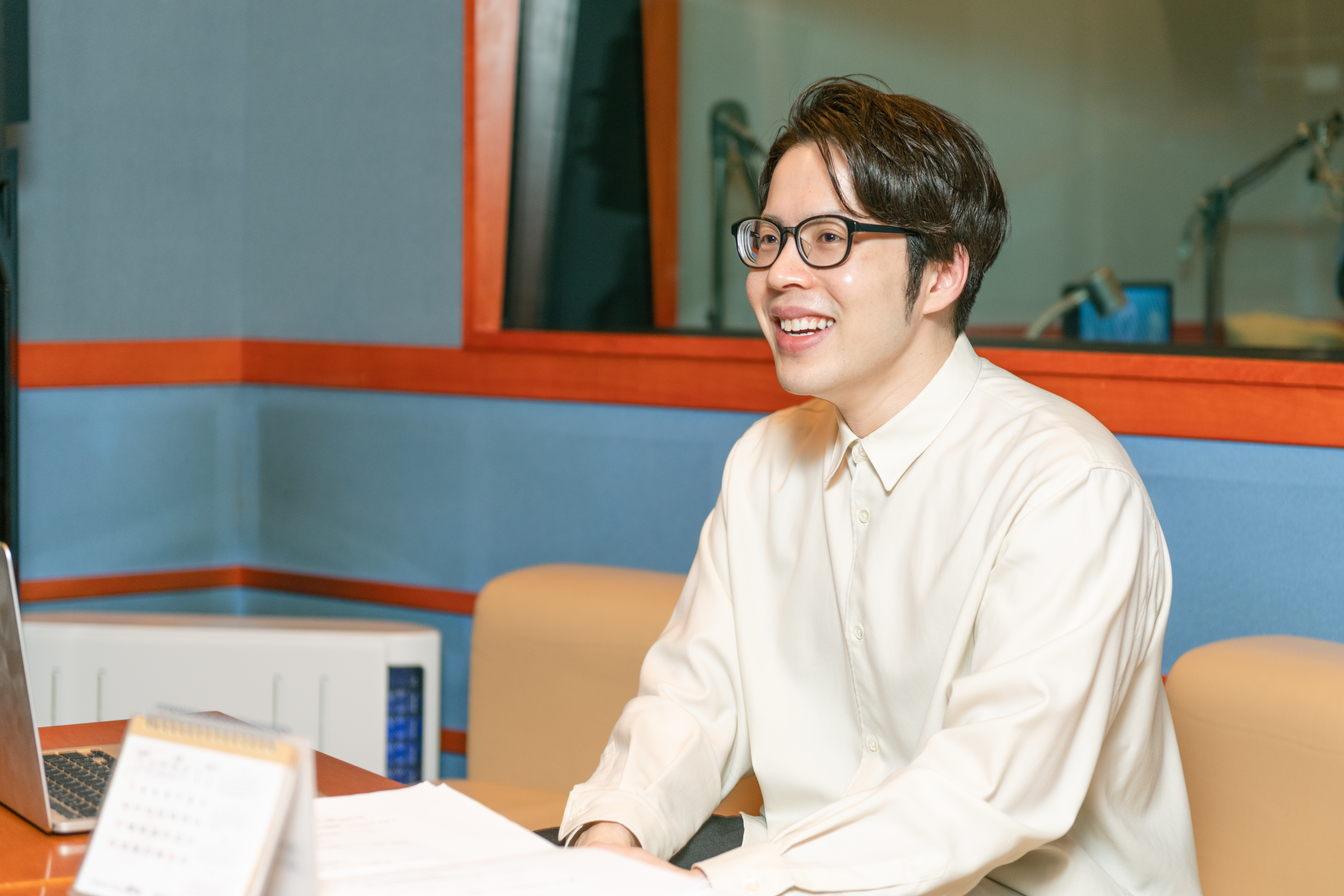
Masahiro Kobayashi
Professional Narrator
A Japanese male narrator handling over 200 projects a year across corporate videos, commercials and documentaries. Recorded in a broadcast-quality home studio and delivered fast.
Listen to voice samplesRelated Articles
Trainable Articulation for Narrators: Scientific Ways to Improve Diction with Tongue Training, Dental Approaches, and a 5-Minute Morning Routine
A practical, science-based guide to improving narration diction: measurable tongue-strength training, dental perspectives including mouthpieces and tongue-tie, and a professional 5-minute morning warm-up.
Narration Demand and Audio Specs for Game Streaming & Esports: How to Design a Voice That Delivers Real-Time Energy
A practical guide to narration for game streaming and esports: vocal techniques for real-time excitement, audience unity, and platform-specific audio specifications.
How Narrators Slow Vocal Aging: Voice Muscle Training, Posture, Breathing, and Career Strategy in Your 40s and 50s
Practical methods professional narrators in their 40s and 50s use to slow vocal aging: voice muscle training, posture correction, breathing, session management, and career strategies that turn changing vocal tone into an advantage.
CONTACT
Narration Enquiries & Quotes
Corporate VP, commercials, e-learning, product manuals — you do not need everything decided. Send the script length, intended media and target date, and I will come back with a proposal.
- From
- ¥50,000〜
- Turnaround
- 24 hours
- Format
- WAV / MP3
* If you have a fixed budget, let me know and we can work from there.
Or email directly: info@kobatee.jp