Narration as Auditory Accessibility: Audio Description Production Methods and the Specialized Skills Narrators Need
Narration from ¥50,000, delivered in as little as 24 hours.
* If you have a fixed budget, let me know and we can work from there.
Designing Understanding, Not Merely Filling in the Invisible
Narration is more than reading beautifully. Audio description (AD) for visually impaired audiences is, at its core, auditory accessibility. It translates visual-only information into language within extremely limited time, without disrupting the rhythm of the work. That requires a design philosophy fundamentally different from standard corporate videos or commercials.
The first question in AD is not “What should we describe?” but “What should we leave out?” If you verbalize everything, the listener cannot process it. In practice, I prioritize information in this order: 1) actions essential to story comprehension, 2) scene changes, 3) changes in facial expression, 4) on-screen text, 5) art direction and atmosphere. For example, in a silent three-second moment, “he stands up” and “he hesitates and pulls his hand back” carry very different meanings. By contrast, wall color or prop shape should be omitted unless they matter to the story.
The Core Method: Time Allocation and Information Compression
Unlike standard narration, AD scripts are not written as complete prose first. They are built by calculating the number of characters or words that can fit into silent gaps. In Japanese, a safe and intelligible density is roughly 4 to 6 characters per second. Beyond that, comprehension drops quickly. In a 2.5-second gap, that means compressing the line to around 10 to 12 characters.
For example:
Weak: “He slowly steps backward with a surprised expression on his face.”
Better: “He gasps and steps back.”
The meaning is nearly identical, but the second is shorter and clearer. In AD, verbs matter more than modifiers, and observation matters more than interpretation. Instead of “sadly,” say “he lowers his head.” Instead of “angrily,” say “she furrows her brow.” Over-defining emotion can take interpretation away from the audience.
In production, precise timecode management is essential. Using Premiere Pro, DaVinci Resolve, or Pro Tools, cue points should be checked down to the frame level. Scripts should include entries like: “00:12:08–00:14:02 Door opens halfway.” Before recording, I assign each cue a priority level A/B/C. If timing becomes too tight, lower-priority lines can be cut quickly. This makes retake decisions much faster.
Specialized Skills Narrators Need
The most important quality in AD performance is not flair but transparency. The voice must not overshadow the work, yet it must never be missed. Achieving that balance requires skills different from conventional expressive narration.
First, breath design for ultra-short inserts. In one- or two-second windows, breath placement directly affects how much information fits. Initial consonants must be clear, endings must not trail off, and the tone must remain controlled rather than overly assertive.
Second, a vocal presence that does not compete with dialogue or sound effects. Even if the read is strong, an overly sharp 2–4 kHz range can clash with the original mix. While a U87-style microphone may offer presence, in practical AD work, tools like the TLM 103, MKH 416, or a more neutral AT4040 often provide clarity without unnecessary flashiness.
Third, restraint in emotional delivery. AD is guidance, not substitution. If the narrator sounds too tearful during a crying scene, the performance begins to intrude on the film’s emotional design.
Fourth, handling on-screen text correctly. Subtitles, signs, smartphone screens, and letters are often crucial. But if read in the wrong order, they create confusion. Phrasing such as “On screen, the text reads: ‘Store Closing Notice’” works well because it states the source of the information first.
Recording and Mixing: Practical Technical Points
For recording, aim for peaks around -12 to -6 dBFS, with a noise floor ideally below -60 dBFS. AD often enters during very quiet scenes, so room noise is more noticeable than in many standard projects. Avoid heavy compression; something around 2:1 with 2–3 dB of gain reduction is usually enough. For EQ, a gentle low cut below 100 Hz and minor shaping around 3 kHz is often sufficient. The goal is not simply a “good voice,” but a voice that remains comfortable over long listening periods.
Mixing must also respect the original program audio. If AD is delivered on a separate track, loudness targets may need to align around -24 LKFS or -16 LUFS, depending on the platform or playback environment. Always confirm the delivery specs. In accessibility work, operational accuracy is as important as artistic quality.
Final Thought: Narration as a Form of Information Access
Audio description is not only an act of inclusion; it is also one of the purest forms of narration training. What information is truly necessary? How much is enough to communicate, and when does it become too much? How can understanding be maximized with very few words? These are lessons that carry over into every other type of narration work.
A “good voice” is only the entrance.
To support auditory accessibility, a narrator needs observation, editorial judgment, restraint, and the ability to imagine how another person receives information. The job is not to explain the world with a voice, but to open access to the world through a voice. That, to me, is one of the greatest possibilities of narration.
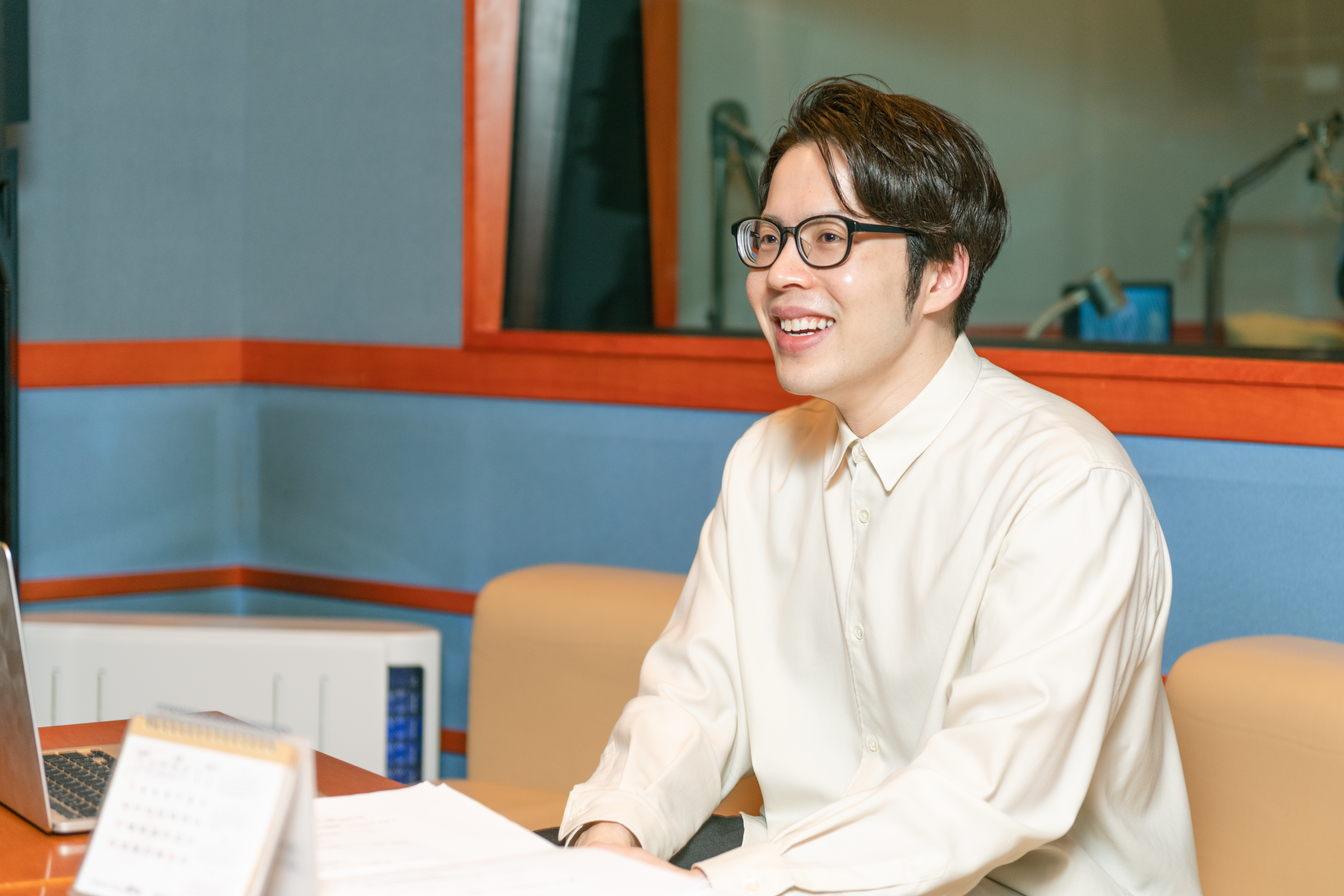
Masahiro Kobayashi
Professional Narrator
A Japanese male narrator handling over 200 projects a year across corporate videos, commercials and documentaries. Recorded in a broadcast-quality home studio and delivered fast.
Listen to voice samplesRelated Articles
Designing Narration for Audio Guides: Pacing at the Exhibit, Timing for GPS Triggers, and Workflow with Curators
A practical guide to narration design for museum, gallery, and tourism audio guides: pacing at exhibits, pause design for GPS-triggered playback, and efficient workflows with curators.
Multilingual Narration for Expos and International Exhibitions: Coexisting with Simultaneous Interpretation, Unifying Pavilion Tone, and Managing Recording Schedules
A practical guide to multilingual narration for expos and international exhibitions, covering coexistence with simultaneous interpretation, pavilion tone design, and recording schedule management.
Narration Design for Short-Form Social Video: How to Win the First Second in 15, 30, and 60 Seconds
A practical guide to narration for TikTok, Instagram Reels, and YouTube Shorts, covering first-second vocal hooks and vertical-format audio design by 15, 30, and 60-second durations.
CONTACT
Narration Enquiries & Quotes
Corporate VP, commercials, e-learning, product manuals — you do not need everything decided. Send the script length, intended media and target date, and I will come back with a proposal.
- From
- ¥50,000〜
- Turnaround
- 24 hours
- Format
- WAV / MP3
* If you have a fixed budget, let me know and we can work from there.
Or email directly: info@kobatee.jp