How to Order Home Studio Narration Without Mistakes: Complete Checklist and Script Template
Narration from ¥50,000, delivered in as little as 24 hours.
* If you have a fixed budget, let me know and we can work from there.
A Practical Template for Ordering Home Studio Narration Without Mistakes
People often hear that home studio narration is fast and flexible. But when it is time to place an order, many clients worry:
“What exactly should I provide?”
“Will revisions increase and create more work?”
“Is the quality lower than a studio session?”
The answer is simple: the strength of home studio recording is not just lower cost. Its real advantage is that, when the brief is organized well, it delivers speed, consistency, and efficient revisions.
In other words, the success of a home studio project depends not only on the narrator’s skill, but also on how clearly the client structures the request.
In this article, I will share a pre-recording checklist and a script template you can use right away for corporate videos, service explainers, recruitment videos, and training content.
Why Home Studio Recording Works So Well for Corporate Projects
The biggest advantage of home studio recording is not simply that the narrator records at home. It is that the workflow is highly adaptable.
In corporate video projects, it is common to need changes after the first recording, such as:
- product name updates
- revised numbers
- changing the tone of a single sentence
- tightening pauses to fit timing
With a home studio setup, these changes can often be handled quickly without the burden of rebooking a studio or rearranging multiple schedules. That is a major operational benefit.
Also, when the narrator fully controls the recording environment—mic distance, vocal level, noise management, and file export—the sound can remain consistent across sessions.
For clients, what matters most is not flashy equipment. It is receiving a stable result that matches the intended direction every time.
Pre-Order Checklist: The 6 Essentials
When ordering home studio narration, these six items are the minimum you should prepare.
1. Where the audio will be used
YouTube, corporate video, trade show, web ad, e-learning, etc. The required pacing changes by platform.
2. Target audience
Prospective customers, existing clients, students, medical professionals, and so on. Different audiences require different vocal emphasis.
3. Desired tone
Trustworthy, upbeat, calm and premium, friendly, etc. If this is vague, revisions tend to increase.
4. Reference for the read
“Please make it calm” or “Please make it energetic” is not enough. Ideally, provide:
- a reference video URL
- a similar commercial or corporate video style
- examples of what to avoid
5. Length and delivery format
Total duration, whether separate files are needed, WAV or MP3, 48kHz/24bit, and so on. These details directly affect editing.
6. Proper nouns and accent guidance
Company names, product names, personal names, place names, and technical terms. Sharing these in advance greatly reduces revisions.
A Ready-to-Use Request Template
Here is a simple order template you can use as is.
> Subject: Inquiry About Home Studio Narration Recording
>
> Purpose: Corporate introduction video
> Audience: New business partners and job candidates
> Desired tone: Trustworthy, with a slightly friendly and natural delivery
> Reference image: A calm pace similar to the recruitment video by Company XX
> Script length: About 900 Japanese characters
> Target duration: Around 4 minutes
> Delivery format: WAV 48kHz/24bit, separated by paragraph
> Preferred deadline: First take by April 18
> Expected revisions: Minor adjustments for proper nouns and wording
> Notes: The product name “XX” uses the following accent pattern: YY
With this format, the narrator can prepare much more accurately.
By contrast, if the instruction is only “Please make it sound good,” it takes more time to reach the result you already have in mind.
Script Template: A Readable Script Is Half the Audio Quality
A readable script is not just a courtesy. It is a production design tool that stabilizes recording quality and lowers revision costs.
I recommend organizing the script like this:
Script Template
- Project title:
- Usage:
- Target duration:
- Full narration text:
- Words to emphasize:
- Pronunciation of proper nouns:
- Accent instructions:
- Desired breaks:
- Read styles to avoid:
Example
- Project title: Company introduction video
- Usage: Website and sales materials
- Target duration: 3 minutes 30 seconds
- Words to emphasize: “challenge,” “trust,” “technical strength”
- Proper noun pronunciation: “XX Tech” = pronunciation guide
- Read styles to avoid: do not make it overly commercial, no theatrical intonation
Inside the script itself, it also helps to add pronunciation notes for difficult words and avoid overly long sentences.
In home studio work, there is often no live director present to make instant decisions, so the precision of the written script directly affects the final result.
Three Ways to Maximize the Strength of Home Studio Recording
First, do not aim for perfection on the first pass.
Home studio work is flexible, so it is often best to confirm the overall direction with the first take and then fine-tune only the necessary parts.
Second, describe revisions in clear language.
Instead of saying, “Make it a little brighter,” say things like:
“Lighten the sentence endings,”
“Increase the pace by 5%,”
“Make it feel more conversational than explanatory.”
This leads to much more accurate adjustments.
Third, specify delivery based on your editing workflow.
Decide in advance whether you want one full file or separate files by paragraph, and whether you want shorter silences between lines. This makes video editing much easier.
Conclusion
The strength of home studio narration is not that it is merely a substitute for studio recording. It is a practical production method that fits modern video workflows.
And the key to unlocking that strength is not only finding a skilled narrator, but also providing a well-structured brief.
By using the checklist and script template above, you can:
- reduce uncertainty when placing the order
- reduce the number of revisions
- improve consistency in the final result
Home studio recording becomes more powerful when the project is well prepared.
That is why the first thing to improve is not the microphone discussion, but the communication design.
For your next narration project, try using the templates in this article exactly as they are.
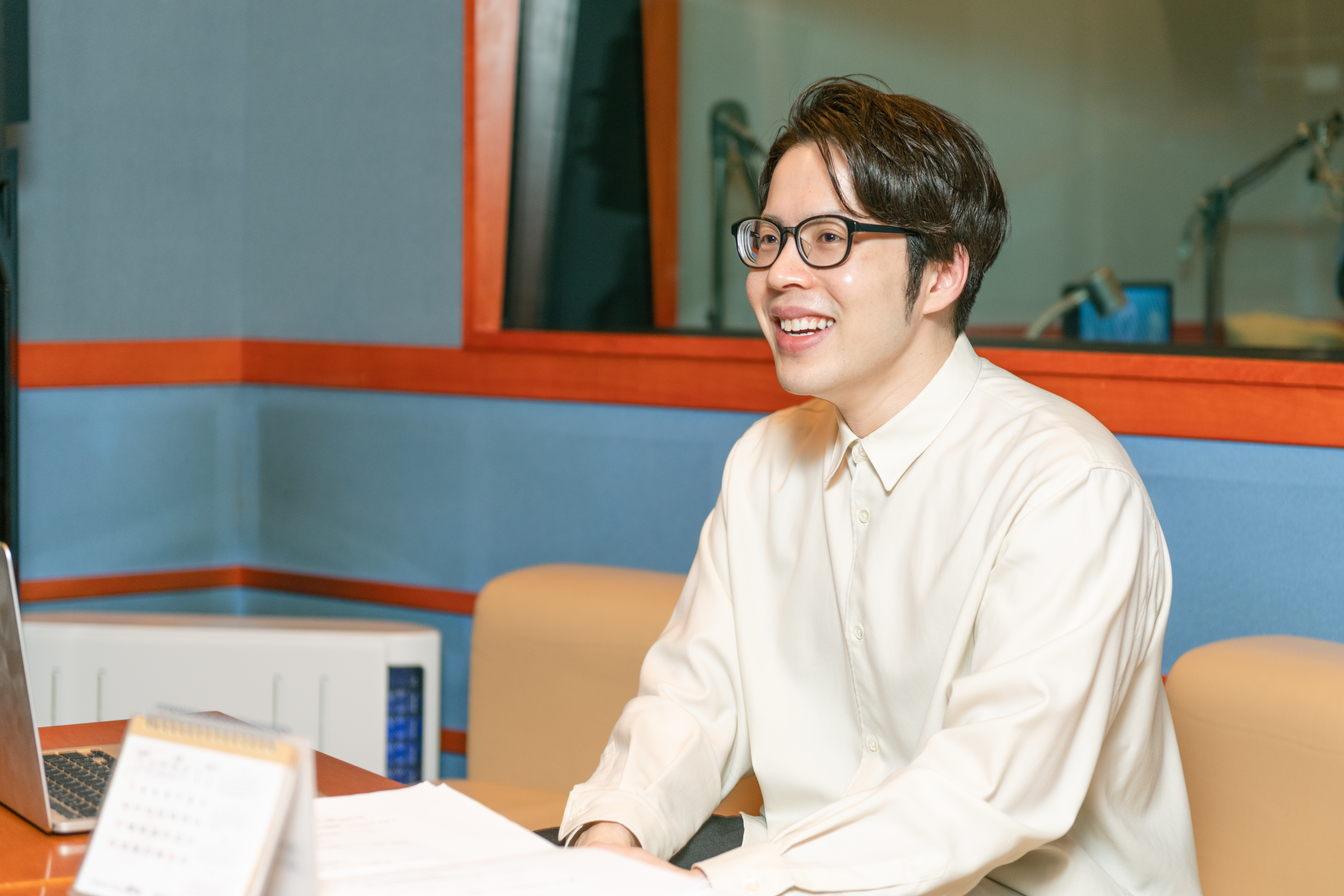
Masahiro Kobayashi
Professional Narrator
A Japanese male narrator handling over 200 projects a year across corporate videos, commercials and documentaries. Recorded in a broadcast-quality home studio and delivered fast.
Listen to voice samplesRelated Articles
Depreciation for Home Studio Narrators: Useful Tax Strategies for Mics, PCs, and Soundproofing
A practical guide to depreciation for home studio narrators, covering useful lives for microphones, audio interfaces, soundproofing, and PCs, plus when to expense costs immediately.
Turn Recording Pressure into Performance: Mental Control and Flow Routines for Narrators
How voice narrators can handle pre-session pressure, regulate nerves, sustain focus, and build practical routines to enter a flow state when it matters most.
Cloud DAW Strategies for Home Voice Talent: Comparing Soundtrap, BandLab, and Audacity Cloud for Real-Time Client Sessions
A practical guide for home voice talent on choosing and using cloud DAWs, comparing Soundtrap, BandLab, and Audacity Cloud-style tools, and designing real-time client-attended recording sessions.
CONTACT
Narration Enquiries & Quotes
Corporate VP, commercials, e-learning, product manuals — you do not need everything decided. Send the script length, intended media and target date, and I will come back with a proposal.
- From
- ¥50,000〜
- Turnaround
- 24 hours
- Format
- WAV / MP3
* If you have a fixed budget, let me know and we can work from there.
Or email directly: info@kobatee.jp