Accessibility Through Narration: Considerations for the Visually Impaired and Older Adults
Narration from ¥50,000, delivered in as little as 24 hours.
* If you have a fixed budget, let me know and we can work from there.
Rethinking Accessibility in Video Through Narration
In video production, accessibility is often discussed in terms of subtitles, audio description, and interface design. However, standard narration itself is also a major factor in how easily viewers can understand a piece. For visually impaired audiences and older adults in particular, audio is not merely supplementary information—it may be the primary channel for understanding.
When narration is treated only as a tool to create mood, the result can be a video that is difficult to follow. By contrast, when creators carefully design who the message is for, what should be said, in what order, and at what pace, the same video becomes far more accessible.
Accessibility is not limited to special add-on features. If narration is planned with care from the early stages of production, the final work can become easier to watch and easier to understand for a much wider audience.
What Makes Narration Easy to Follow for Visually Impaired Audiences and Older Adults
Easy-to-follow narration is not simply slow narration. It is created through a combination of factors: information structure, word choice, pacing, pauses, and vocal clarity.
A Clear Order of Information
Viewers who cannot rely fully on visual information often build their understanding of a scene through sound. If the narration jumps between ideas or uses too many vague references, comprehension becomes difficult.
Expressions such as “please look here” or “it changes like this” do not work well for people who cannot clearly see the screen. Instead, the narration should explain:
- what is present,
- what is happening,
- why it matters.
This sequence helps listeners build a mental picture and stay oriented.
Clarity Through the End of Each Phrase
Older adults may especially struggle to catch consonants and phrase endings. If the narrator speaks too quickly, drops endings, or gets buried under background music, meaning can easily be lost.
This is why accessibility depends not only on performance, but also on recording and post-production. Key points include:
- avoiding an overly muddy sound balance,
- mixing BGM and sound effects around speech priority,
- inserting brief pauses around important terms,
- keeping sentences from becoming too long.
Knowing When Understanding Should Take Priority Over Performance
Corporate videos and commercials often call for expressive, emotionally rich narration. But from an accessibility perspective, a highly stylized read is not always the best choice.
For guidance videos, facility introductions, and content related to healthcare, welfare, or public services, it is often better to avoid:
- excessive whispering,
- swallowed articulation,
- acting choices that blur meaning.
When the message itself is important, a “clear read” matters more than a “showy read.”
Practical Narration Design Tips for Production Teams
Accessible narration cannot rely on the narrator’s skill alone. It requires coordinated decisions across scriptwriting, direction, recording, and editing.
Improve Accessibility at the Script Stage
Scripts should be written for the ear, not just for the eye. A sentence that reads well on paper may still be hard to process when heard aloud.
During script review, check the following:
- Are there too many pronouns or vague references?
- Are technical terms explained clearly?
- Are sentences too long?
- Are numbers and proper nouns easy to hear?
- Does the meaning depend too heavily on the visuals?
Choose Voices for Communication, Not Just Beauty
If accessibility matters, casting should focus not only on whether a voice sounds attractive, but also on whether it communicates information effectively.
Useful criteria include:
- stable articulation,
- a vocal tone with enough core to cut through background sound,
- a natural delivery even at a measured pace,
- a voice that remains comfortable over extended listening.
In many projects, reliability and intelligibility serve the audience better than sheer vocal flair.
Final Adjustments in Editing and Mixing
Listenability can change dramatically during post-production. In videos with constant music beds, a balance that seems fine in the studio may still be difficult for viewers to understand.
Final checks should be done not only on professional monitors, but also on devices closer to real viewing conditions, such as:
- small speakers,
- laptop speakers,
- tablets,
- smartphones.
It is also helpful to have third parties review the piece, since fresh listeners often notice unclear sections more quickly than the production team.
Balancing Functional Explanation and Creative Expression
Some creators worry that prioritizing accessibility will make narration feel flat or mechanical. In reality, clarity and artistry are not opposites. In fact, when information is delivered well, the value and intent of the video are often communicated more effectively.
The goal is not to explain everything excessively, but to ensure that essential information can be received without confusion. Consideration for visually impaired audiences and older adults is not just an extra measure for a limited group. Clear narration also benefits people watching in noisy environments, those who cannot raise the volume, and viewers who are less familiar with Japanese.
A Perspective Video Production Needs Going Forward
In the future, video production will increasingly require teams to think not only about what is shown, but also about how meaning is delivered through sound from the planning stage onward. Narration is both part of the creative expression and an infrastructure for guiding viewers through the content.
Accessibility is not a restriction; it is a way to improve design quality. Reconsidering narration through the needs of visually impaired audiences and older adults ultimately leads to videos that reach everyone more effectively. For video professionals, the challenge is to stop seeing narration as merely something to be read aloud, and start treating it as a system for communication.
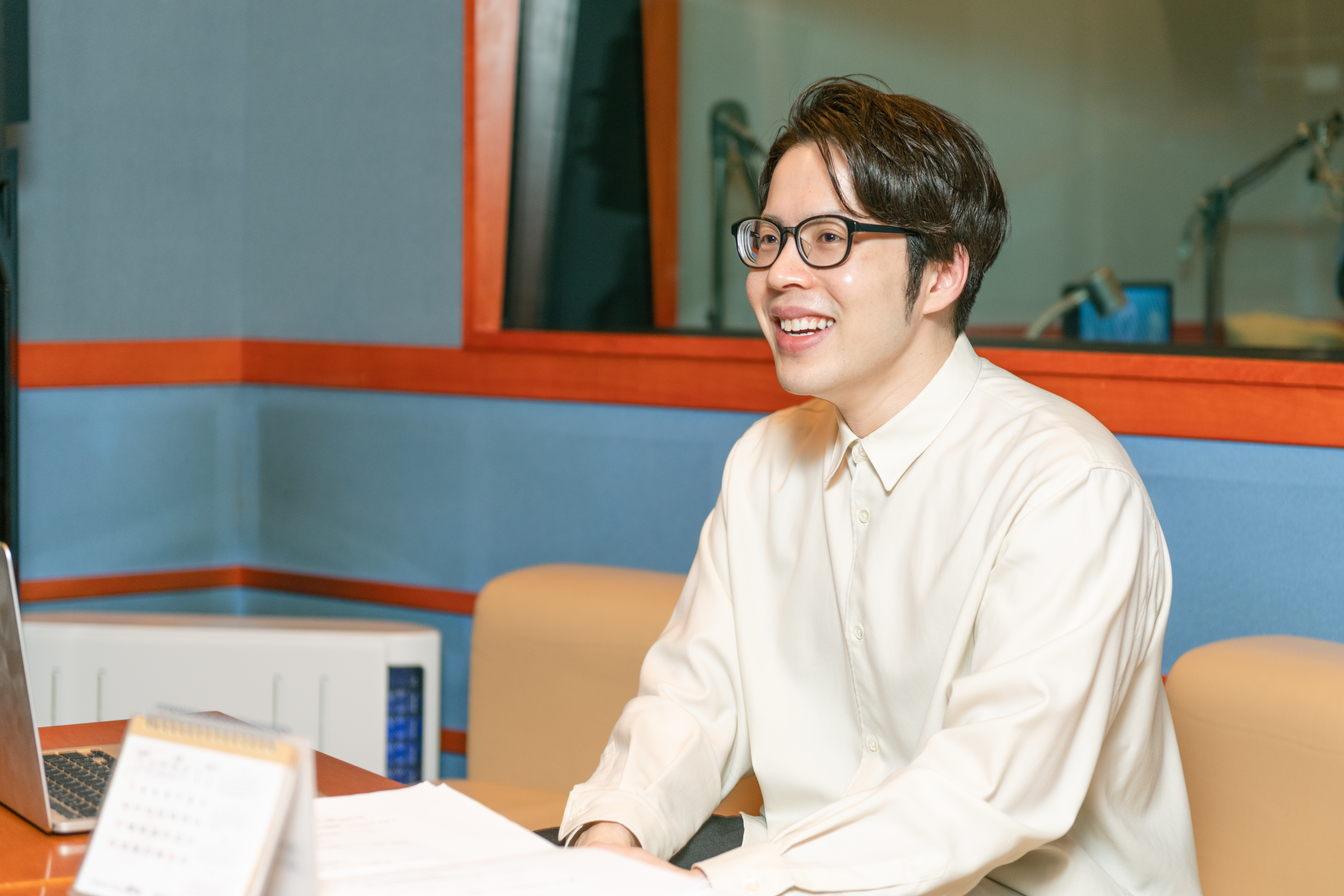
Masahiro Kobayashi
Professional Narrator
A Japanese male narrator handling over 200 projects a year across corporate videos, commercials and documentaries. Recorded in a broadcast-quality home studio and delivered fast.
Listen to voice samplesRelated Articles
Designing Narration for Audio Guides: Pacing at the Exhibit, Timing for GPS Triggers, and Workflow with Curators
A practical guide to narration design for museum, gallery, and tourism audio guides: pacing at exhibits, pause design for GPS-triggered playback, and efficient workflows with curators.
Multilingual Narration for Expos and International Exhibitions: Coexisting with Simultaneous Interpretation, Unifying Pavilion Tone, and Managing Recording Schedules
A practical guide to multilingual narration for expos and international exhibitions, covering coexistence with simultaneous interpretation, pavilion tone design, and recording schedule management.
Narration Design for Short-Form Social Video: How to Win the First Second in 15, 30, and 60 Seconds
A practical guide to narration for TikTok, Instagram Reels, and YouTube Shorts, covering first-second vocal hooks and vertical-format audio design by 15, 30, and 60-second durations.
CONTACT
Narration Enquiries & Quotes
Corporate VP, commercials, e-learning, product manuals — you do not need everything decided. Send the script length, intended media and target date, and I will come back with a proposal.
- From
- ¥50,000〜
- Turnaround
- 24 hours
- Format
- WAV / MP3
* If you have a fixed budget, let me know and we can work from there.
Or email directly: info@kobatee.jp