Webinar & Online Event Recording Guide: Narration Design for On-Demand Distribution
Narration from ¥50,000, delivered in as little as 24 hours.
* If you have a fixed budget, let me know and we can work from there.
Why narration should be designed for on-demand viewing
Webinars and online events no longer end with the live session. Recordings are reused for on-demand delivery, sales enablement, recruitment branding, internal training, and more. That is why production teams should evaluate not only whether a session works live, but also whether it remains clear and useful after the event.
In a live setting, missing context is often covered by atmosphere, chat interaction, host remarks, and audience focus. In archived viewing, however, people may start in the middle, watch at double speed, or listen while multitasking. The way information is received changes significantly.
For that reason, narration design for on-demand distribution should aim for three things:
- The audience can follow the flow even without watching every second of the screen
- Viewers unfamiliar with the original event context can still understand it
- The edit is less likely to create gaps, redundancy, or confusion
Live moderation and archive-ready audio are not the same
In production, hosting and narration are often treated as the same thing. But a style that works well live does not automatically work well in an archive.
Typical live phrases include:
- “Now that it’s time, let’s begin.”
- “If you can hear us, please leave a comment.”
- “We’ll cover that in the Q&A.”
- “Has the slide changed on your screen?”
These lines may be necessary in the live moment, but they often become noise for on-demand viewers. If they can be removed cleanly in editing, that helps. But in many cases they remain tied to the surrounding context. That is why archive-aware wording at the recording stage can greatly reduce the editing burden.
Better phrasing during recording
A good approach is to shift live-only language into wording that still works after the event.
- “Thank you for joining us today”
→ “In this video, we’ll explain this topic through three key points.”
- “Please post your questions in the comments”
→ “We’ll address common questions in the second half.”
- “Please look at the slide”
→ “Here you’re seeing a graph that shows changes in sales over time.”
In short, prioritize language that adds meaning to the content rather than language that only manages the live audience.
Core principles of narration design for recorded distribution
For archive-ready audio, the goal is not simply to keep the session moving in real time. The goal is to ensure that the content still stands on its own after editing.
1. Make the structure audible
Not every viewer will watch from beginning to end. That is why transitions should be stated clearly in the audio.
- “First, let’s look at the background.”
- “Next, we’ll review a practical example.”
- “Finally, we’ll summarize the implementation risks.”
These cues make the content easier to follow, and they also help individual segments stand on their own if clipped for reuse.
2. Reduce dependence on slides
If the speaker relies too heavily on phrases like “this,” “here,” or “the left side,” the message becomes weak when the audience is not fully focused on the screen. Many people watch recordings in a small player window or listen primarily to the audio.
A better method is to briefly verbalize the visual information:
- “This is a diagram showing three process steps.”
- “This table compares last year’s numbers with this year’s.”
- “This chart shows before-and-after changes across cost and workload.”
When narration acts as a guide to the visuals, comprehension improves dramatically.
3. Leave space for editing
Recorded material is almost always trimmed, captioned, restructured, or partially replaced later. If the speaker leaves small pauses between key sentences, editors gain cleaner cut points.
Short pauses are especially useful:
- Before a new section begins
- Right before an important conclusion
- Around slide transitions
- Before names, technical terms, or numbers
Practical points production teams should manage
Quality is shaped not only by the narrator or presenter, but also by production planning. If the recording is intended for later distribution, the script, run-of-show, and edit strategy need to work together.
What to define in the script
At minimum, decide these points in advance:
- Which parts are meant to remain as live moments, and which are expected to be cut
- Whether the opening should be re-recorded for the archive version
- Whether Q&A should stay in the main video or become a separate asset
- Whether additional narration may be inserted later
- Which information should be handled by on-screen text versus spoken audio
Audio considerations during recording
For on-demand content, audio quality often affects viewer retention even more than image quality. Strong room echo or background noise can reduce trust and increase drop-off, even when the content itself is excellent.
Check the following during recording:
- Is the microphone close enough to the speaker’s mouth?
- Is room echo or HVAC noise too strong?
- Is the speaking pace too fast?
- Are sentence endings becoming weak or unclear?
- Are names and technical terms pronounced consistently?
When to add narration in post
If the live audio does not fully support the final viewing experience, adding narration afterward can be very effective. This is especially valuable when:
Good cases for post-recorded narration
- The original hosting language was too live-specific and feels long in the archive
- Slide replacements created inconsistencies in the explanation
- The video needs a clearer introduction or summary
- Q&A or demo sections are being restructured for clarity
- Subtitle or multilingual localization requires more organized spoken information
Post narration should not be seen only as a fix for mistakes. It is often a strategic re-edit that aligns the content with its distribution purpose.
Conclusion: a recording gains value through redesign, not just preservation
A webinar or online event recording is not automatically useful just because it was saved. To become a strong on-demand asset, it needs more than documentation of the live moment. It needs a viewing experience that has been redesigned for later audiences.
Narration design is central to that process.
- Build a structure that remains understandable for any viewer
- Use audio to carry context instead of depending entirely on visuals
- Record in a way that supports smooth editing later
- Add post narration when it improves clarity and usability
When production teams adopt this perspective, the value of archived video rises significantly. Do not aim only for a successful live stream. Aim for a recording that continues to work long after the event is over.
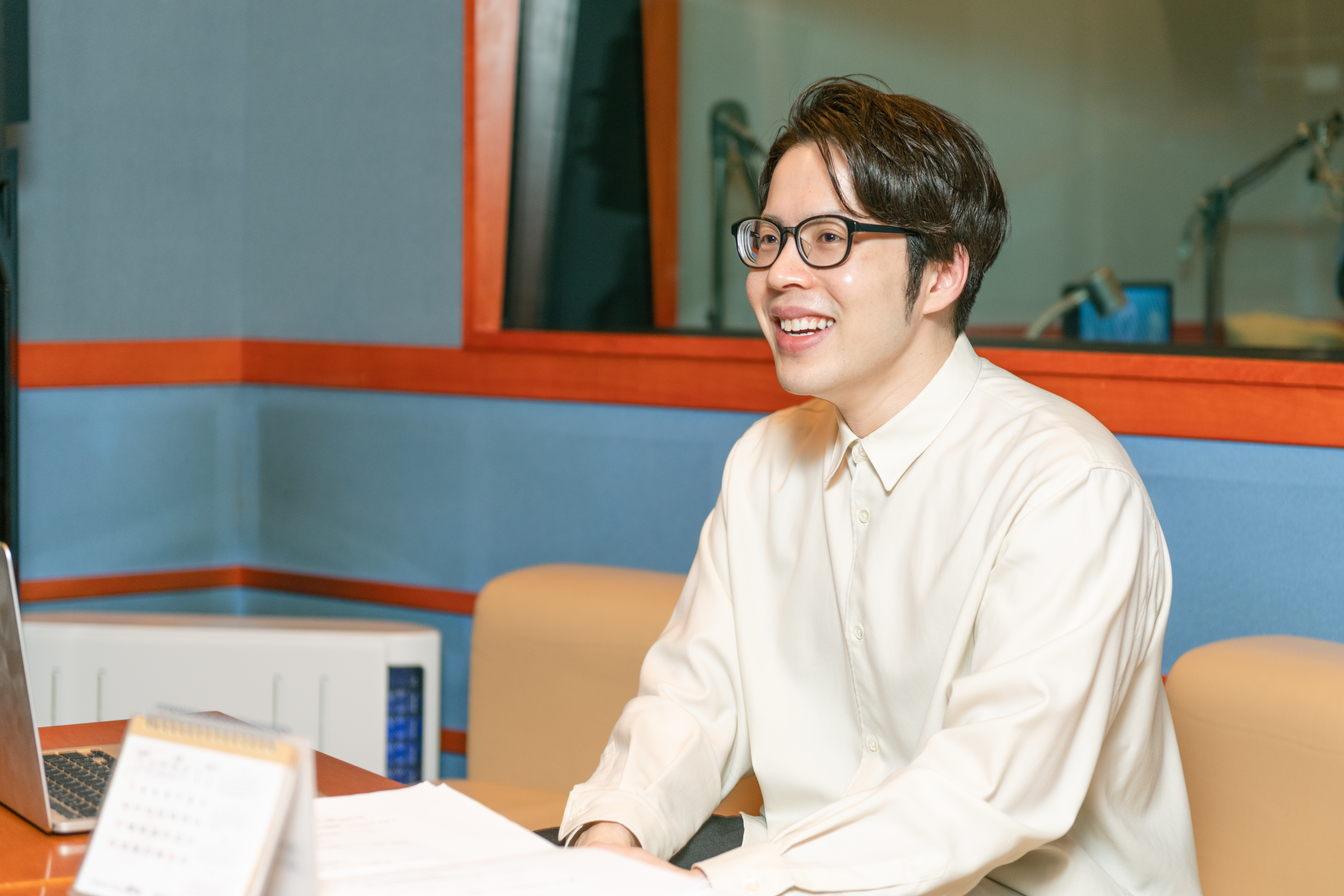
Masahiro Kobayashi
Professional Narrator
A Japanese male narrator handling over 200 projects a year across corporate videos, commercials and documentaries. Recorded in a broadcast-quality home studio and delivered fast.
Listen to voice samplesRelated Articles
The Complete Guide to Podcast Narration and Jingle Production: Voice Design for Openings, Endings, and Transitions, Plus Spotify and Apple Podcasts Audio Standards
A practical guide to podcast narration and jingle production, covering voice-role design for openings, endings, and transitions, plus loudness, audio quality, and delivery specs for Spotify and Apple Podcasts.
DIY Soundproof Doors and Windows for Home Voice Talent: Understanding Dr Ratings, Rental-Safe Builds, and ROI
A practical guide for home voice talent on DIY soundproof doors and windows: how to read Dr ratings, build rental-safe temporary solutions, and calculate cost-effectiveness.
Voice Design for Airline and Airport Announcements: ICAO Clarity, Japanese in Multilingual PA, and Emergency Contrast
A practical guide to airline and airport announcement voice design, focusing on ICAO-style intelligibility, the role of Japanese in multilingual PA, and vocal contrast between routine and emergency messages.
CONTACT
Narration Enquiries & Quotes
Corporate VP, commercials, e-learning, product manuals — you do not need everything decided. Send the script length, intended media and target date, and I will come back with a proposal.
- From
- ¥50,000〜
- Turnaround
- 24 hours
- Format
- WAV / MP3
* If you have a fixed budget, let me know and we can work from there.
Or email directly: info@kobatee.jp