Narration Design for Multilingual E-Learning at Scale: A Production Workflow That Optimizes Subtitles, TTS, and Human Voice Together
Narration from ¥50,000, delivered in as little as 24 hours.
* If you have a fixed budget, let me know and we can work from there.
In multilingual e-learning, the first thing that breaks is not the “voice” but the “design”
In multilingual e-learning projects, problems tend to pile up late in production: “Only the English version runs long,” “Subtitles are unreadable,” “The TTS replacement sounds unnatural,” or “We re-recorded it, but it still doesn’t match the visuals.”
But the cause is not just the narrator’s delivery or recording quality. In many cases, the root issue is that the original Japanese script was written as a finished single-language script, not as something designed for multilingual deployment.
Unlike commercials or corporate videos, e-learning demands accuracy, subtitle readability, compatibility with LMS viewing environments, and long-term reusability. In other words, it is not enough to simply record a good voice. The script, visuals, subtitles, speech synthesis, and human narration all need to be managed under the same rules.
In this article, I’ll share a practical approach I prioritize in real projects: narration design that optimizes subtitles, TTS, and human voice together.
Before choosing a recording method, define the acceptable timing range after translation
In multilingual projects, the first decision should not be whether to use a human narrator or TTS. The first decision should be how much duration variance is acceptable in each language.
Compared to Japanese, English may sometimes become slightly shorter, while German, French, and Spanish often expand at the segment level. Southeast Asian languages also frequently require display timing redesign because of structural differences.
In practice, I recommend defining the following for every slide or scene:
- Sections where visual timing must remain fixed
- Sections where some expansion or contraction is acceptable
- Sections where subtitle comprehension takes priority over narration pace
- Sections that require exact sync with on-screen animation
If you move into translation and recording without this classification, each language will break for different reasons later in the process.
Asking a narrator to “read a little faster” only solves a small part of the problem. What matters is deciding in advance which lines can be sped up and which cannot.
A multilingual-ready script should be “syncable,” not just “readable”
When writing a Japanese script, most teams prioritize clarity and natural expression. That is important, of course. But if multilingual rollout is expected, the script should favor syncability over literary elegance.
Four practices are especially effective:
1. Keep one sentence to one piece of information
2. Avoid overly complex shifts in subject-action-result order
3. Do not overload a single sentence with both UI actions and explanation
4. Separate numbers, terminology, and UI strings so they can be managed independently
For example, a sentence like:
“Open the settings screen, review the notification items, and change the delivery frequency if necessary”
may sound natural in Japanese, but it tends to expand in translation and becomes harder to subtitle.
If you split it into:
“Open the settings screen. Review the notification items. If necessary, change the delivery frequency.”
then subtitle segmentation, TTS control, voice replacement, and re-recording all become easier.
In e-learning, maintainability matters more than literary style. A script that is easy to revise later will ultimately improve overall quality.
If you use TTS, use it first as a validation engine, not as a substitute for human narration
AI voice quality, especially TTS, has improved dramatically, and its use in internal training and large course libraries is growing. The key point is this: before deciding whether TTS will be your final voice, use it during pre-production as a validation tool.
In multilingual e-learning workflows, I often insert rough TTS from the first translation draft. The goal is not to judge voice quality, but to test for:
- Segment-level timing overruns
- Unnatural subtitle line breaks
- Inconsistent pronunciation of terms
- Misread numbers, symbols, and abbreviations
- Sync drift against screen transitions
Human narrators can understand meaning and naturally compensate. But that also means they can hide structural weaknesses in the script or translation.
TTS is inflexible, and precisely because of that, it reveals design flaws early. This is especially effective in training materials filled with abbreviations, product names, and mixed alphanumeric expressions.
Then, once the weak points are exposed, use human voice for high-value courses or brand-sensitive content, and use TTS for modules that update frequently. This hybrid model is the most realistic approach today.
In human recording, preserve replaceability, not just great final takes
One thing directors often overlook in human recording is that what matters is not only “the best take now,” but “the easiest take to replace later.”
In e-learning, a single sentence often needs revision months later because of legal changes, UI updates, or internal policy changes. If the original tone, tempo, and mic distance cannot be recreated, partial replacement will sound unnatural.
For that reason, the following should always be documented during recording:
- Distance between microphone and mouth
- Standing position or seated posture
- Preamp settings, gain, and recording rate
- Reference pace for delivery
- Pronunciation rules for proper nouns and abbreviations
- Alternative takes that were acceptable, even if not selected
It also helps to record two versions per slide: one slightly restrained, and one slightly more forward. This makes later patch-ins much easier.
It may seem excessive when looking only at the finished product, but in training content, this insurance can save substantial cost.
Subtitles and narration should not be treated as separate tasks
The more divided the workflow is between subtitle staff, translators, and audio staff, the easier it is for terminology and line-break rules to drift apart.
A practical solution is to manage the script not only as a reading script, but also as the parent source for subtitle text, the TTS dictionary, and the terminology glossary.
At minimum, a centralized spreadsheet should include:
- Segment ID
- Original Japanese text
- Shortened subtitle text
- English or other language translations
- Terminology notes
- Pronunciation instructions
- Target duration
- Actual recorded duration
- Revision history
The advantage of this system is visibility: everyone can see what changed, where, and by whom.
This is especially important for LMS-delivered training, where the main video, VTT/SRT subtitles, SCORM descriptions, and thumbnail copy often drift slightly out of sync. Even if the narration is complete, the learning experience as a whole is not.
Narration should be managed not as an isolated deliverable, but as part of the learner journey.
In multilingual projects, final quality depends more on upstream precision than on performance skill
As a narrator, I believe expressiveness and listenability absolutely matter. But in multilingual e-learning, upstream precision has even greater influence on the final result.
A script that translates cleanly, sentence structures that sync well, recording designed for later replacement, pre-checks with TTS, and unified management with subtitles—only when these are in place can the value of human narration fully emerge.
In many production environments, audio is still treated as a downstream task. In reality, the entire project becomes more stable when audio is placed at the center of the design process.
If multilingual rollout or AI voice adoption is currently increasing your rework, review not only how you record, but how you design the script in the first place.
Many problems that appear to be audio problems are actually design problems. And once the design is right, human voice, TTS, subtitles, and translation all become dramatically easier to manage.
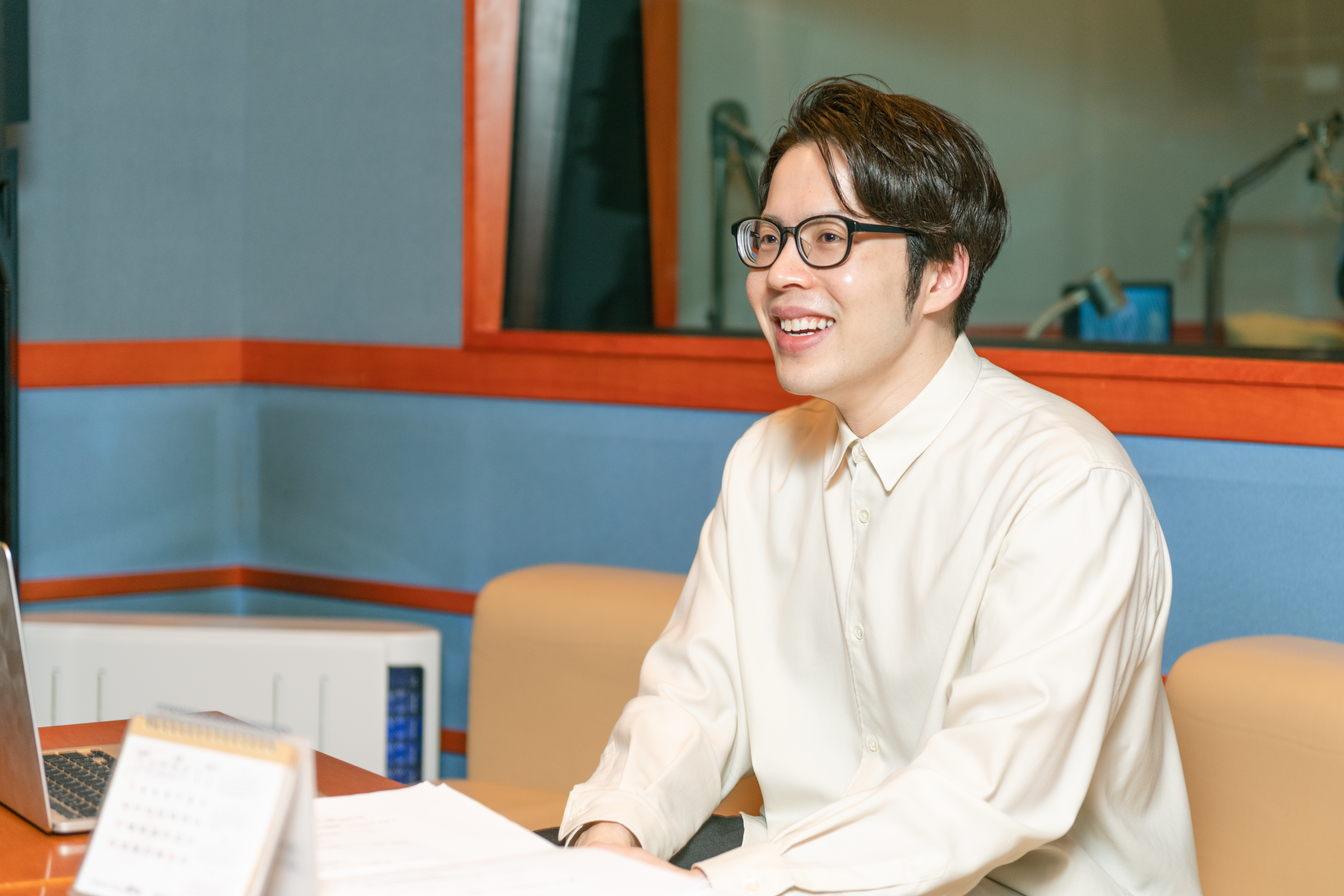
Masahiro Kobayashi
Professional Narrator
A Japanese male narrator handling over 200 projects a year across corporate videos, commercials and documentaries. Recorded in a broadcast-quality home studio and delivered fast.
Listen to voice samplesRelated Articles
The Complete Guide to Podcast Narration and Jingle Production: Voice Design for Openings, Endings, and Transitions, Plus Spotify and Apple Podcasts Audio Standards
A practical guide to podcast narration and jingle production, covering voice-role design for openings, endings, and transitions, plus loudness, audio quality, and delivery specs for Spotify and Apple Podcasts.
DIY Soundproof Doors and Windows for Home Voice Talent: Understanding Dr Ratings, Rental-Safe Builds, and ROI
A practical guide for home voice talent on DIY soundproof doors and windows: how to read Dr ratings, build rental-safe temporary solutions, and calculate cost-effectiveness.
Voice Design for Airline and Airport Announcements: ICAO Clarity, Japanese in Multilingual PA, and Emergency Contrast
A practical guide to airline and airport announcement voice design, focusing on ICAO-style intelligibility, the role of Japanese in multilingual PA, and vocal contrast between routine and emergency messages.
CONTACT
Narration Enquiries & Quotes
Corporate VP, commercials, e-learning, product manuals — you do not need everything decided. Send the script length, intended media and target date, and I will come back with a proposal.
- From
- ¥50,000〜
- Turnaround
- 24 hours
- Format
- WAV / MP3
* If you have a fixed budget, let me know and we can work from there.
Or email directly: info@kobatee.jp