Home Studio Workflow for Multilingual eLearning: Narration Design Built for LMS Integration and Easy Revisions
Narration from ¥50,000, delivered in as little as 24 hours.
* If you have a fixed budget, let me know and we can work from there.
Why Home Studio Recording Matters in Multilingual eLearning Beyond Just Speed
The usual advantages of home studio recording are easy to understand: no travel, simpler scheduling, and faster turnaround. Those are real benefits. However, from the perspective of a video producer or director, the true value of home recording in multilingual eLearning lies elsewhere: it allows you to design the narration workflow around inevitable revisions.
eLearning is a field where updates are expected. This is especially true for corporate training, medical device instruction, SaaS tutorials, compliance education, and similar content. In many cases, the Japanese version is only the starting point, followed by English, Chinese, and Southeast Asian language versions. In that environment, the key issue is not only the quality of the initial recording, but how smoothly partial updates can be handled weeks or months later.
In a traditional studio workflow, rebooking talent, recreating the same conditions, coordinating attendance, and matching assets all add cost. In a properly designed home studio setup, consistency can be maintained through controlled mic distance, gain settings, noise management, file naming, and script version handling. In other words, home recording is not just a cost-saving option. It is a recording infrastructure built for ongoing operations.
Narration Design Changes When You Plan for LMS Integration
In multilingual eLearning, deliverables are often managed not only as finished videos but also as modules inside an LMS, or Learning Management System. In that context, delivering one long narration file is far less practical than providing audio broken down by screen, topic, or quiz item.
For example, a structure like this makes downstream handling much easier:
- `01_Intro_001`
- `03_Safety_004`
- `05_Quiz_Q2`
- `07_Summary_002`
The advantage of this approach is clear: even if only one sentence changes, there is no need to re-export the entire narration. It also makes replacement points easier to identify in Premiere Pro, DaVinci Resolve, After Effects, Articulate Storyline, Adobe Captivate, and similar tools.
A home studio workflow is especially well suited to short, frequent replacement requests. What directors should keep in mind is that quality depends not only on how well the narration is performed, but also on how easily the audio assets can be broken down and managed. If you can brief a narrator not only to “read well,” but to “record in a way that integrates smoothly into LMS implementation,” the burden on the entire project drops significantly.
Terminology Lists, Reading Rules, and Silence Length Standards Determine Multilingual Success
In multilingual projects, inconsistency is often more damaging than an outright misread. If product names, abbreviations, department names, legal terms, or English words are pronounced slightly differently from one session to another, the problem may seem minor in Japanese, but it often becomes a visible consistency issue once translated versions are produced.
That is why it is effective to align at least these three items before recording:
1. A terminology list
2. Reading rules
3. Silence length standards
“Silence length” refers to the pause at the beginning and end of sentences, and between sections. In eLearning, these pauses are closely tied to subtitle timing, screen transitions, and click-based waits. For example, setting a standard such as “0.4 seconds at sentence end, 0.8 seconds at section end” helps keep timing stable even when revisions are made.
Home studio recording is well suited to this kind of disciplined operation because repeated sessions can be done in the same environment. Unlike studio bookings, the conditions are less likely to vary each time, making it easier for operational rules to translate directly into consistent audio quality. The result is a smoother workflow for translators, video editors, and LMS implementation teams alike.
What the Comparison with AI Voices Reveals About the Role of Human Home Narration
As of 2024, AI voice adoption in eLearning has advanced considerably. It is especially attractive for large-scale multilingual rollout, scratch narration, and projects with frequent updates. Does that mean human home studio narration is becoming unnecessary? I do not believe so.
In fact, the division of roles is becoming clearer. AI voices are strong at fixed phrasing, mass generation, speed, and cost efficiency. Human home narration is strong at shaping intonation to reduce cognitive load, handling sentence endings to avoid misinterpretation, adjusting the emotional temperature of warning sections, and fine-tuning nuance in specialized fields.
This is particularly important in areas such as medical content, safety training, harassment prevention, and personal data protection. In these cases, it is not enough for the text to be merely readable. It must be difficult to misunderstand. That is where a human narrator’s ability to prioritize meaning becomes essential. With a home studio workflow, you can preserve that human judgment while still achieving revision speed closer to modern AI-era production expectations.
So the advantage of home recording is not simply “studio quality from home.” It is the ability to connect human interpretive skill to the production speed demanded in the AI era.
Five Practical Direction Points That Improve Results Immediately
Finally, here are five items that video producers and directors should specify at the start when ordering home studio narration:
- Define the file naming convention in advance
- Clearly mark the script version number
- Attach a terminology list and reading rules
- Specify silence length and peak level standards
- Request revisions at the sentence level
These five points alone can significantly reduce the number of revision rounds. The last point—requesting revisions sentence by sentence—is especially important. If replacements are requested by paragraph, pauses and overall timing are more likely to shift, which increases the editor’s workload. Recording with the assumption that each sentence can be managed independently dramatically improves the maintainability of the entire project.
Home studio recording is not just about where the voice is recorded. It is about workflow design across production, translation, implementation, and future updates. The more a piece of content continues to evolve after delivery—as in multilingual eLearning—the more clearly these advantages appear. That is why home recording today should be understood not only as “recording with good sound,” but as “recording in a way that is resilient to revisions.”
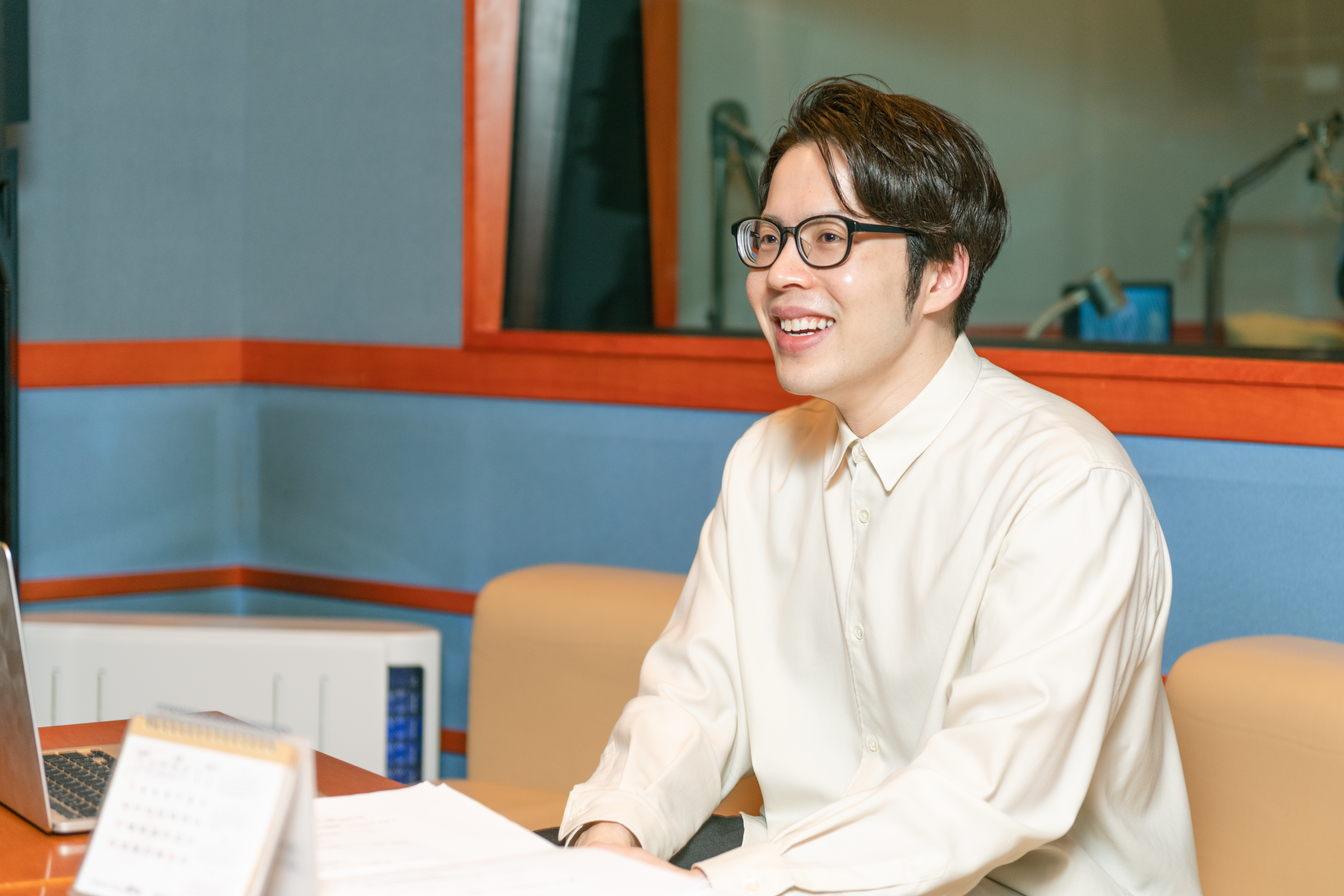
Masahiro Kobayashi
Professional Narrator
A Japanese male narrator handling over 200 projects a year across corporate videos, commercials and documentaries. Recorded in a broadcast-quality home studio and delivered fast.
Listen to voice samplesRelated Articles
Depreciation for Home Studio Narrators: Useful Tax Strategies for Mics, PCs, and Soundproofing
A practical guide to depreciation for home studio narrators, covering useful lives for microphones, audio interfaces, soundproofing, and PCs, plus when to expense costs immediately.
Turn Recording Pressure into Performance: Mental Control and Flow Routines for Narrators
How voice narrators can handle pre-session pressure, regulate nerves, sustain focus, and build practical routines to enter a flow state when it matters most.
Cloud DAW Strategies for Home Voice Talent: Comparing Soundtrap, BandLab, and Audacity Cloud for Real-Time Client Sessions
A practical guide for home voice talent on choosing and using cloud DAWs, comparing Soundtrap, BandLab, and Audacity Cloud-style tools, and designing real-time client-attended recording sessions.
CONTACT
Narration Enquiries & Quotes
Corporate VP, commercials, e-learning, product manuals — you do not need everything decided. Send the script length, intended media and target date, and I will come back with a proposal.
- From
- ¥50,000〜
- Turnaround
- 24 hours
- Format
- WAV / MP3
* If you have a fixed budget, let me know and we can work from there.
Or email directly: info@kobatee.jp