Designing for Revisions: Home Studio Narration Workflow for Multilingual Delivery and AI Subtitles
Narration from ¥50,000, delivered in as little as 24 hours.
* If you have a fixed budget, let me know and we can work from there.
The Value of Home Studio Recording Is Not Just Speed
When people talk about home studio narration in video production, the first benefits usually mentioned are obvious ones: no travel, faster turnaround, and lower studio costs. Those are real advantages. But in actual 2024 production workflows, a more important value has emerged: using home studio recording as a revision-ready operational infrastructure.
This matters especially for projects such as corporate videos, SaaS product explainers, e-learning, trade show videos, recruitment films, and product promos for overseas markets—projects where script changes continue even after “completion.” Price updates, new features, legal review, subtitle revisions, and wording changes for localization are all common. Requests like “we only need one sentence replaced” are no longer exceptional.
The key point is not merely that home studio recording is “fast.” It is that you can build a process from the start in which replacing a single line later does not create audible inconsistency. I call this a “revision-first recording design.”
What Is Revision-First Recording Design?
In a revision-first workflow, it is not enough for the narrator to simply read the script well. The production side and the voice side should share four core elements.
First is script granularity. If every sentence has an ID number, revision requests become dramatically more precise. Instead of saying, “the latter half of the third paragraph,” the team can say, “replace only the ending of take 2 for N-12.” That alone reduces unnecessary back-and-forth.
Second is the audio file segmentation policy. Delivering one long finished file may be enough for a simple project, but for sustainable workflows, it is better to manage audio on three levels: sentence, section, and final-use version. This makes editing, translation, and subtitle work more stable. For multilingual production in particular, the cleaner the Japanese master structure is, the easier English, Chinese, and other language versions become.
Third is consistency of recording conditions. If microphone position, gain, recording distance, noise reduction, compression feel, or file format change every time, a pickup session one week later will not match. The real advantage of home studio work is that the same person can reliably recreate the same environment.
Fourth is the reading philosophy. A revision-friendly read should not be overly emotional, but it should not sound mechanical either. Especially in product videos and B2B content, a stable, edit-friendly pace often outperforms a highly performative one-take style.
The More You Use AI Subtitles and Machine Translation, the More Human Recording Design Matters
Today, AI transcription, subtitle generation, and draft translation are standard tools. Because of that, some people assume narration can now be recorded more casually. In practice, the opposite is true. The more AI steps there are in the pipeline, the more the quality of the original voice recording affects the entire production.
For example, audio with clear sentence starts, consistent pronunciation of proper nouns, and neatly controlled retakes tends to produce better subtitle recognition. Also, if pauses corresponding to punctuation are properly shaped, subtitle line breaks become more natural. AI is powerful, but it performs best when fed well-structured human-recorded material.
A home studio setup is especially strong here because it allows careful optimization for “AI-friendly reading.” In limited studio sessions, priorities often focus on timing, direction, and client approval, leaving little room to optimize for subtitle operations. With home recording, however, you can prepare alternate pronunciations of proper nouns, separate abbreviation files, or adjust number reading to be more internationally neutral for overseas versions.
Practical Home Studio Tactics for Multilingual Delivery
In multilingual projects, one of my strongest priorities is to create the Japanese version not merely as a “finished original narration,” but as a parent audio dataset for all future language versions.
That means reading beautifully is not enough. The Japanese version must also function as a structured reference for translation and adaptation.
Practically, this starts with building a pronunciation list for proper nouns, product names, department names, alphanumerics, and key terminology before recording begins. If this remains vague, translators, subtitle editors, and narrators in other languages will all drift in notation and pronunciation.
Next, avoid making each sentence unnecessarily long. A line that feels natural in Japanese often expands significantly in English, causing timing problems. In home studio work, it is highly effective to record both a version with more timing margin and a version that prioritizes information density. That makes downstream decisions much easier.
Also, for elements that change frequently—prices, dates, campaign names, feature names, legal wording—it is often smart to deliver them as separate files from the start. To the editor, this may feel slightly over-segmented, but during operations and updates, it is enormously helpful.
What Producers Should Look for When Hiring a Home Studio Narrator
If you are a producer or director choosing a home studio narrator, I recommend not judging only by “voice quality” or how impressive the demo sounds. In revision-heavy projects, the following criteria are often more important:
- Can they reproduce the same tone and mic distance during retakes?
- Are file naming and take management well organized?
- Is their noise processing controlled rather than excessive, so the files remain easy to edit?
- Can they clearly explain the intent behind different reading styles?
- Can they discuss workflows with AI subtitles and multilingual expansion in mind?
In other words, a home studio narrator should be not only a performer, but also a designer of voice operations. When this aligns with the production team, efficiency improves not just for one project, but across an entire series.
Home Studio Work Will Increasingly Be Chosen for Workflow, Not Just Recording
Voice synthesis and AI voices will continue to advance. In that environment, human narrators will find it harder to differentiate themselves through vocal quality alone. That is exactly why the true strength of home studio work is no longer “I can record anytime,” but rather the ability to create voice assets that can withstand revisions, translation, subtitles, and long-term operational use.
In video production, narration is not merely a decorative final layer. Once you factor in wording changes, global rollout, and subtitle optimization, the initial recording design has a major impact on total production cost. Home studio recording is a highly modern solution because it allows that design to be implemented flexibly.
If you still think of home studio narration as just a simplified version of studio recording, you are missing its real value. Today, home studio work is better understood as a practical production foundation optimized for an era of constantly updated content.
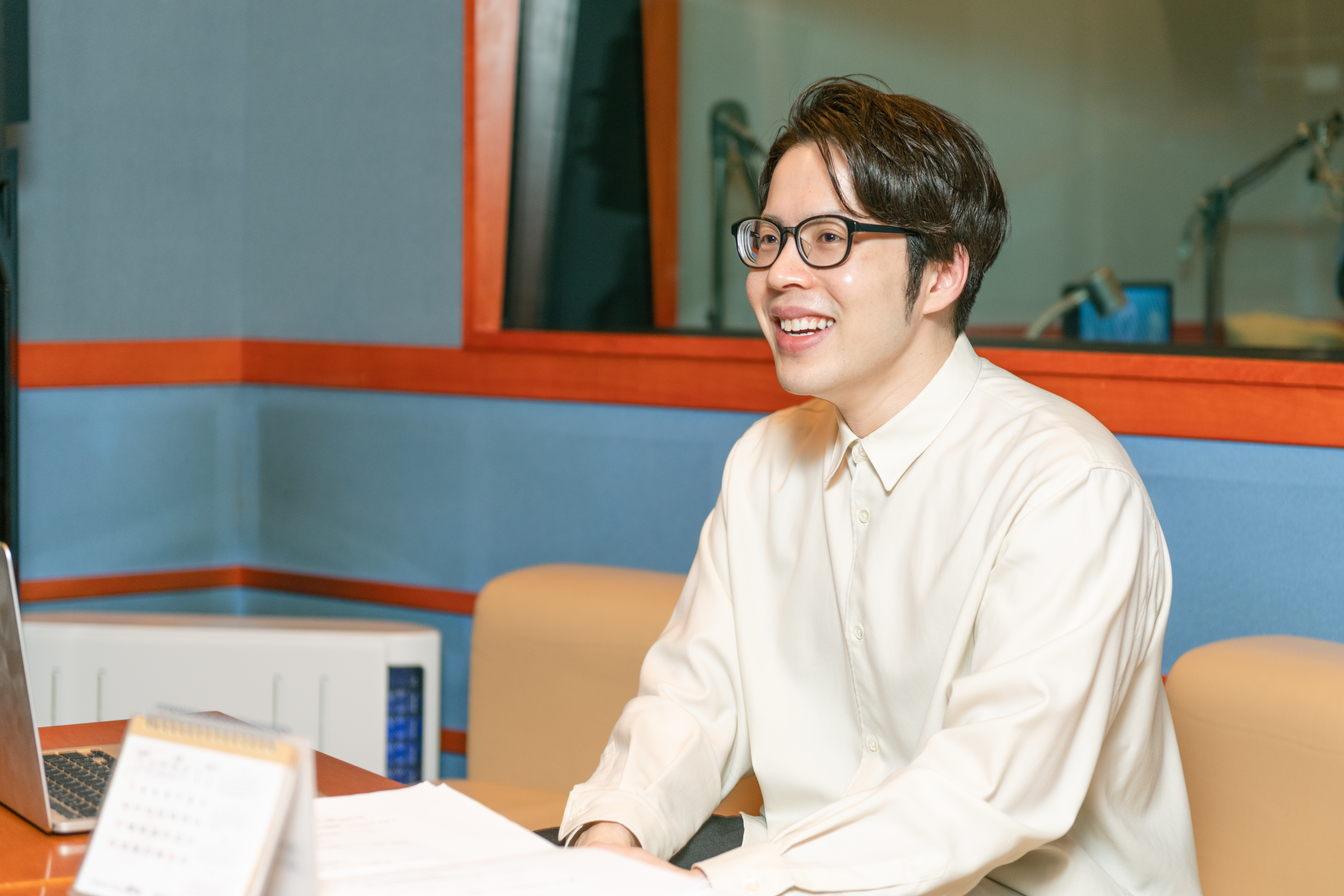
Masahiro Kobayashi
Professional Narrator
A Japanese male narrator handling over 200 projects a year across corporate videos, commercials and documentaries. Recorded in a broadcast-quality home studio and delivered fast.
Listen to voice samplesRelated Articles
Depreciation for Home Studio Narrators: Useful Tax Strategies for Mics, PCs, and Soundproofing
A practical guide to depreciation for home studio narrators, covering useful lives for microphones, audio interfaces, soundproofing, and PCs, plus when to expense costs immediately.
Turn Recording Pressure into Performance: Mental Control and Flow Routines for Narrators
How voice narrators can handle pre-session pressure, regulate nerves, sustain focus, and build practical routines to enter a flow state when it matters most.
Cloud DAW Strategies for Home Voice Talent: Comparing Soundtrap, BandLab, and Audacity Cloud for Real-Time Client Sessions
A practical guide for home voice talent on choosing and using cloud DAWs, comparing Soundtrap, BandLab, and Audacity Cloud-style tools, and designing real-time client-attended recording sessions.
CONTACT
Narration Enquiries & Quotes
Corporate VP, commercials, e-learning, product manuals — you do not need everything decided. Send the script length, intended media and target date, and I will come back with a proposal.
- From
- ¥50,000〜
- Turnaround
- 24 hours
- Format
- WAV / MP3
* If you have a fixed budget, let me know and we can work from there.
Or email directly: info@kobatee.jp